
According to the folk narratives which I grew listening to, after the university was set to fire, the books in the library kept burning for 6 months.
When I was in school, there wasn’t much craze to travel, explore, or visit any place as it is today. The school used to organise only a few trips which parents wouldn’t permit due to safety issues. Also, holidays meant visiting our ancestral house in the village, and meeting Nana-Nani, besides completing the vacation home-work. While the former brought joy as we would get so much love from our grandparents (which I think we all miss today) and the money while leaving, the latter was an unnecessary burden. Schools would run from 7 AM to 2 PM, six days a week and enough work for the seventh day as well, why charge the holidays. Moreover, there wasn’t a culture of parents taking us on trips except shrines to fulfill their aforesaid wish. Hence, it shouldn’t come as a surprise that the place which was 80 km from my home, I didn’t visit there till the second year of my doctorate. Yes, I am talking about the Nalanda University, which is in ruins.
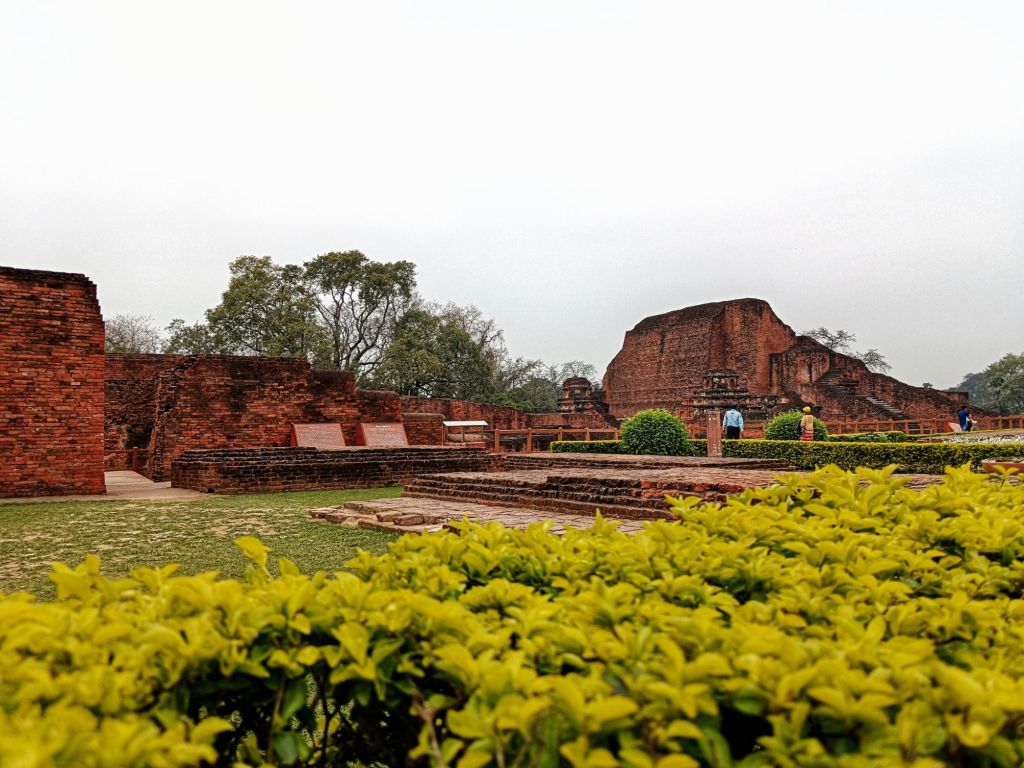
How to visit: If you’re coming by air, book your flight tickets to Gaya or Patna airport. If you like the train journey, then disembark at Gaya Jn or Patna Jn. From there, you can hire a taxi, go to the bus stand to take a bus or take another train to Nalanda. The e-rickshaw or auto will drop you here.
Duration: 4-5 hours is enough to explore this place. Plan your trip alongside Rajgir. Do visit the archaeological museum of Nalanda situated nearby.
Best time to Visit: Onset/Departure of Winter. Visiting in summer is like baking yourself in the oven as the place is entirely open.
Stays: Hotels are available. One can get finer stays in Rajgir which is 15 km away from here.
Tickets: 25/- (Cash) and 20/- (Online). Book online from the QR code provided there. Guides can also be hired.
And our exploration starts:
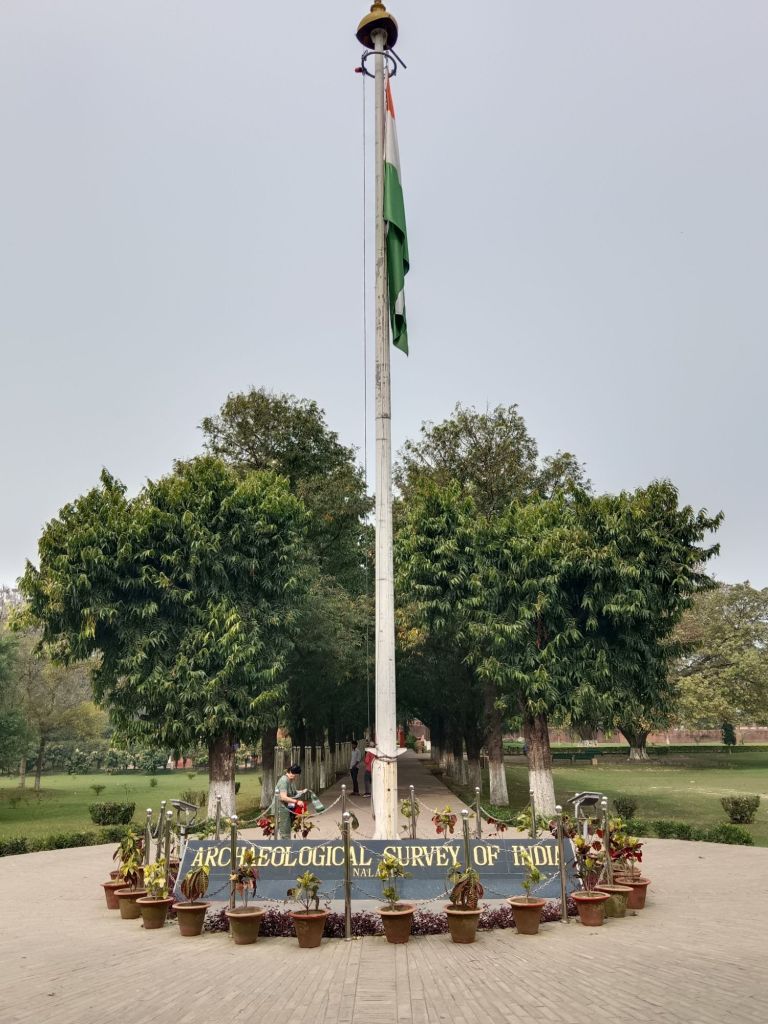
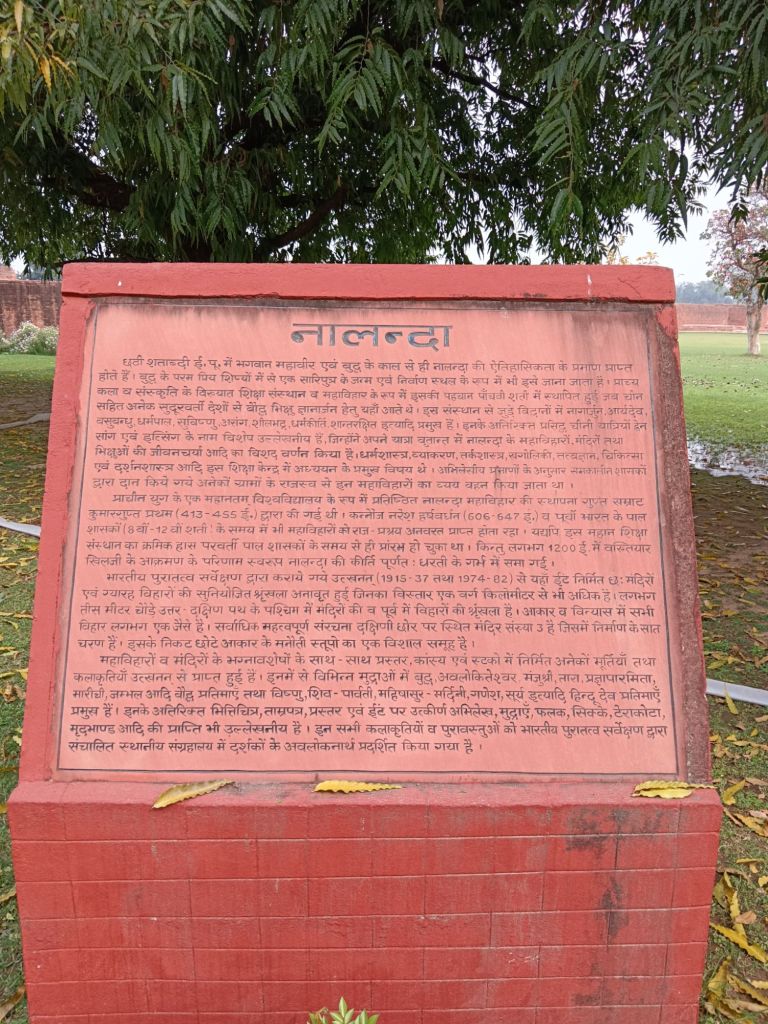
The ruins of Nalanda University (also sometimes referred to as Nalanda Mahavira) are specifically for those who take a keen interest in history and architecture. Others can also visit to appreciate the opulence of the place which was the centre of education, where people from every corner of the world used to come and participate in the teaching-learning process. At the same time, it makes us sad to realise that it’s limited to being part of the UNESCO World Heritage Site. One can Wikipedia if one is interested in knowing more about the history. It is said to be the centre of Jain and Buddhist preachings.
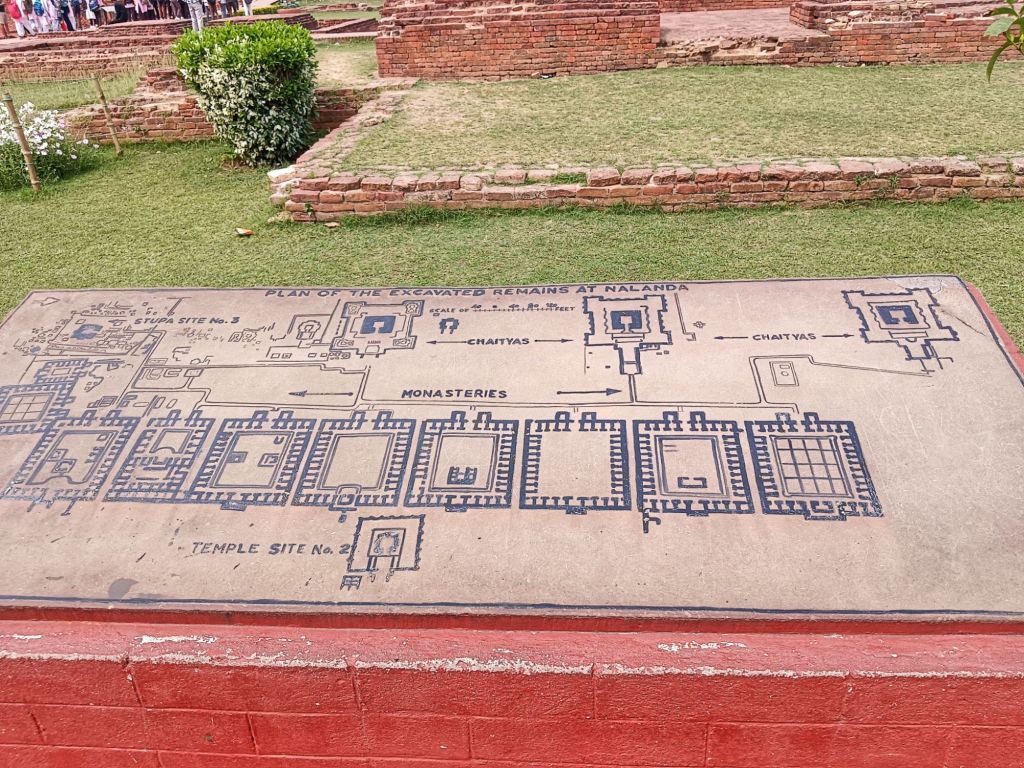
The place was excavated in two phases 1915–1937 and 1974–1982, due to which we’re able to find the the ruins of a central path, 11 monasteries, and 6 temples. The most notable temple is number 3, which archaeologists date to the 6th century CE. The site also includes stupas, holy shrines, and residential and educational buildings. After, visiting you’ll feel that the area of Nalanda University is even less than your college campus. The actual university would have been much larger. The ravages of time might have engulfed several of these structures.
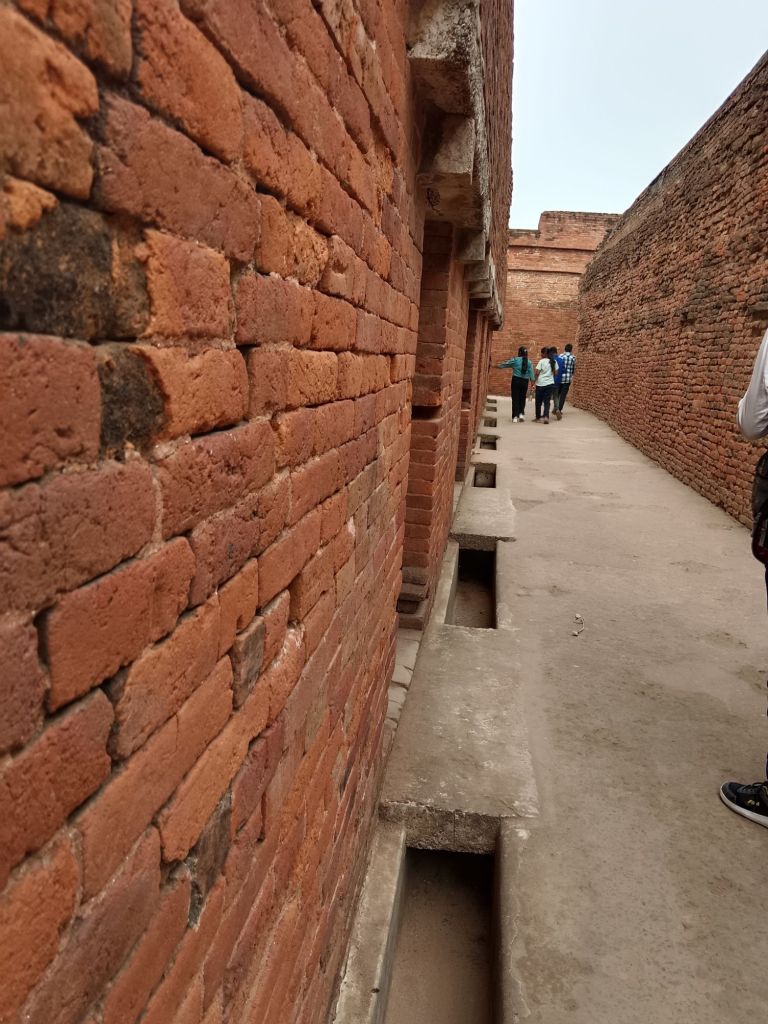

The whole structure is brick red in colour. You’ll surprised to know that even after times immemorial, the bricks used in the structure are intact. The demarcation is also evident since one part resembles a living quarter whereas the other part is for preaching/learning. Also, there is a proper drainage system, both in monasteries and living quarters, justifying the excellence in architecture. There were wells to draw the water. Also, there was a passage for the rainwater to pass through the drainage.

It’s difficult to exactly pinpoint what these structures can be since it’s dilapidated state. Perhaps stupas or some kind of place of worship or centre for receiving knowledge. However, several guesses have been made about the spaces that have been excavated. The antecedent tells that this place was burnt which is evident when one looks at the bricks. It has turned black in colour.
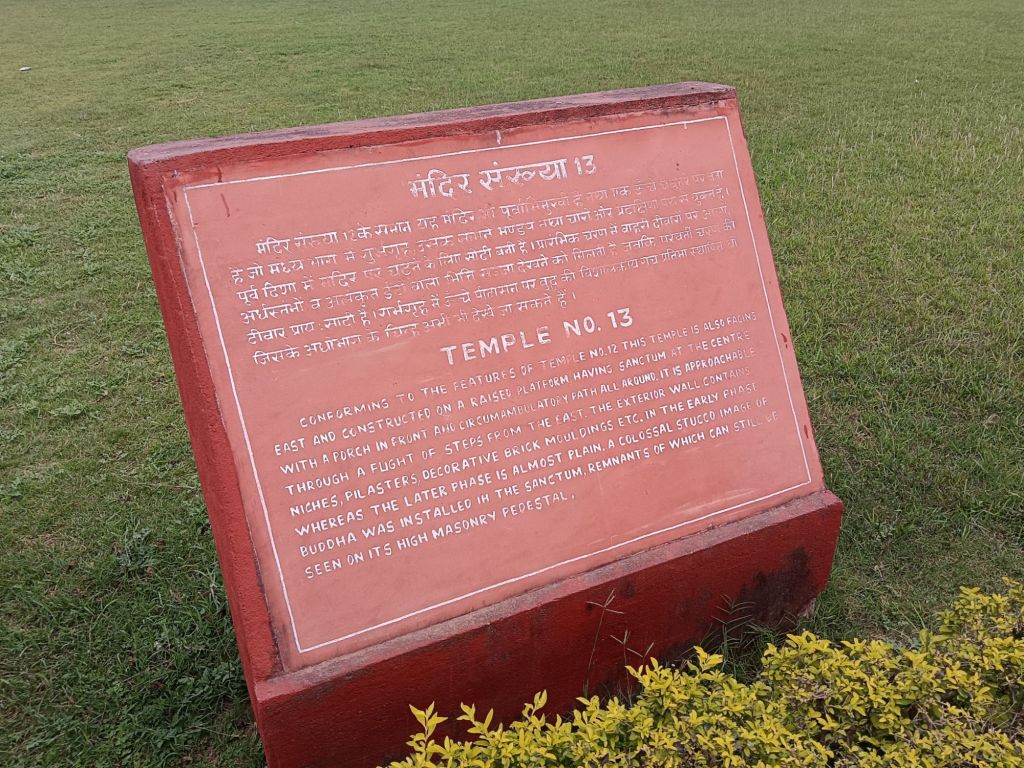
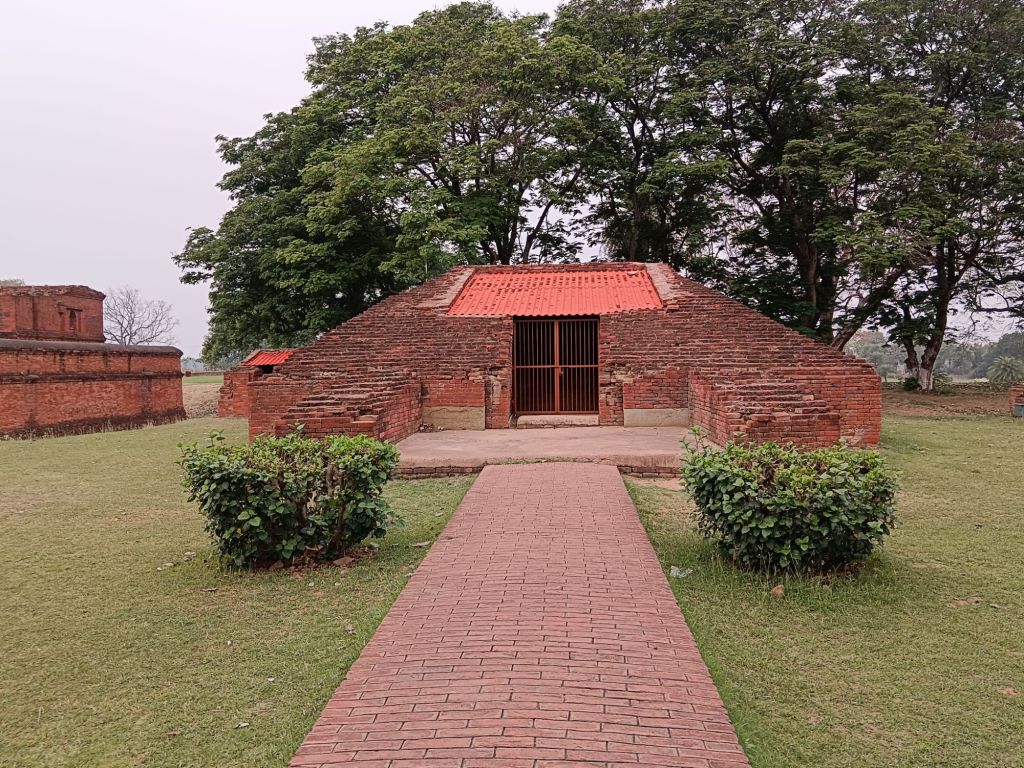
One can find several structures like these on one side of the ruins. It may be the centre of worship or the place where monks used to preach. Entry is prohibited inside such architecture but on peeping, I couldn’t locate the idol of God or anything similar. Moreover, such structures are on an elevated platform.
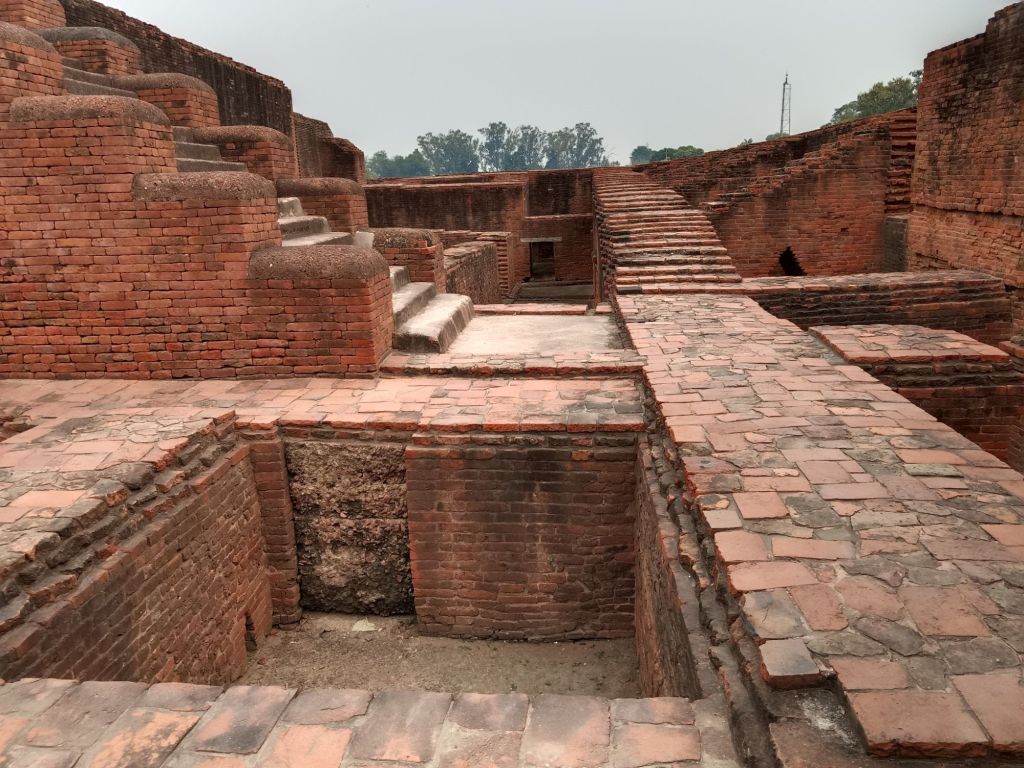
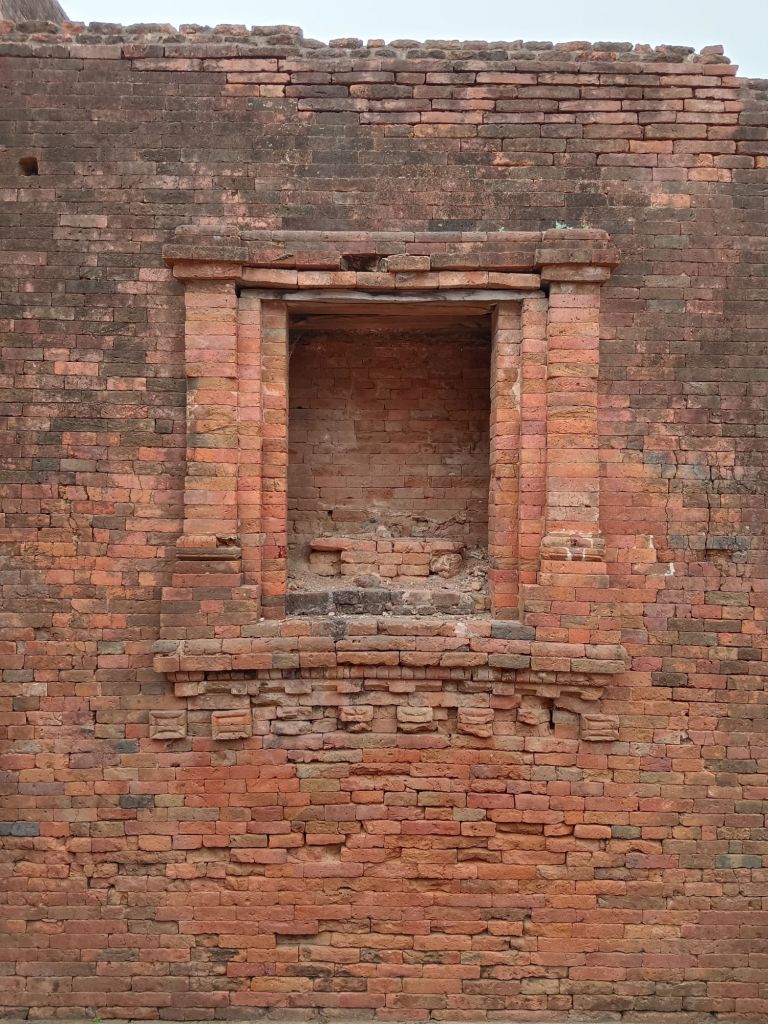
After taking a look, I ardently wished to know more about the structures, the centres, the living space and all. I could imagine how life was here when it was operational but that doesn’t give the clear picture. Also, it’s a wonder; how every brick/rock has been meticulously placed above each other without the aid of any machines.
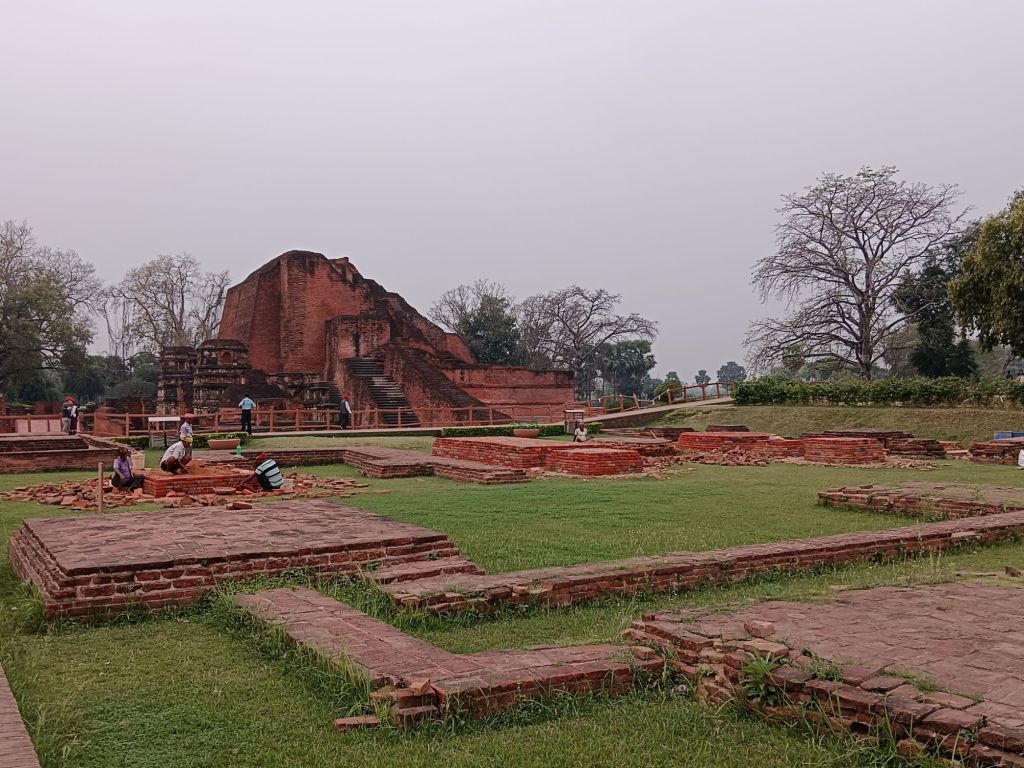

Since it’s a UNESCO World Heritage Site, several projects, though artificially to resemble the actual architecture are in progress at the site. I had the chance to interact with the workers which revealed that the materials that will be used are specially designed to meet the purpose.
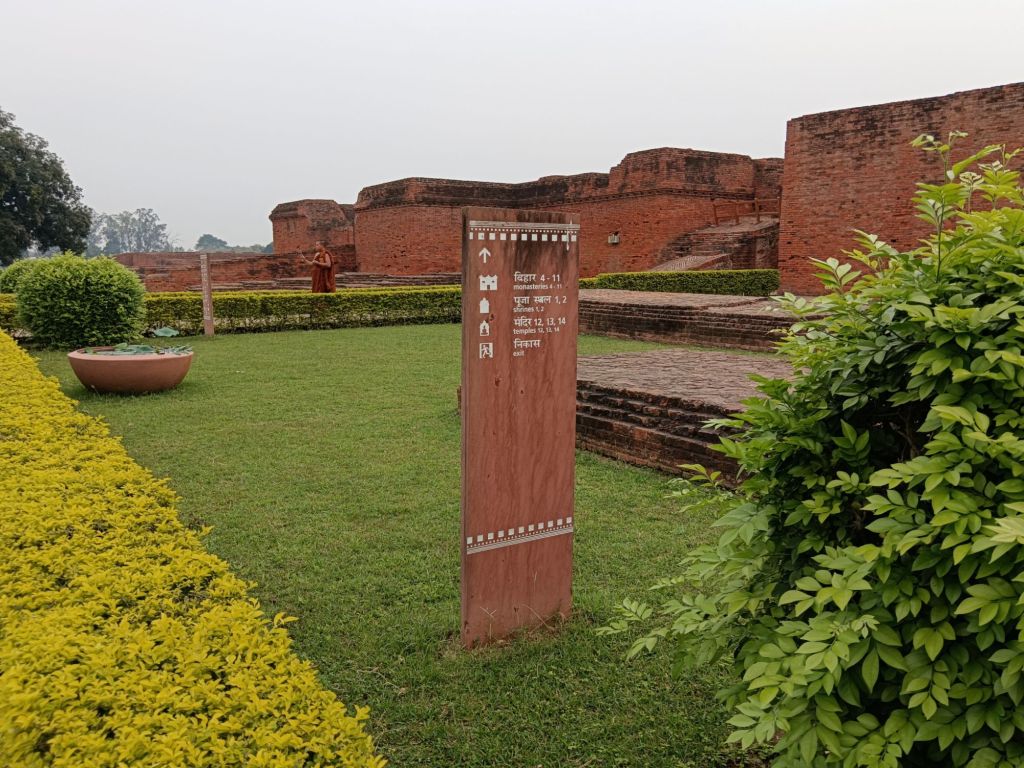
There is much more to deduce from these ruins than what I illustrated above and I would suggest you pay a visit at your first opportunity whenever you visit Bihar. I assure you that you’ll return with a bag full of memories and knowledge.
©Shashank
I missed my Pragmatica on this trip. Hence, the pictures were clicked by phone.
 Pragmatic's Personas