Crossfade- Episode 7: Theatre Games-II
I welcome you to the second episode of Theatre Games. In the previous episode, I discussed five theatre games: Zip, Zap Zop, Name and Gesture, Pass the Clap, Passing the imaginary ball, and Shake Down. I advise you to become familiar with it if you haven’t visited it yet; click here. I’ll continue our discussion of the remaining five theatre games in this episode, with special emphasis on how these exercises can help develop children’s listening skills, confidence, and imagination.

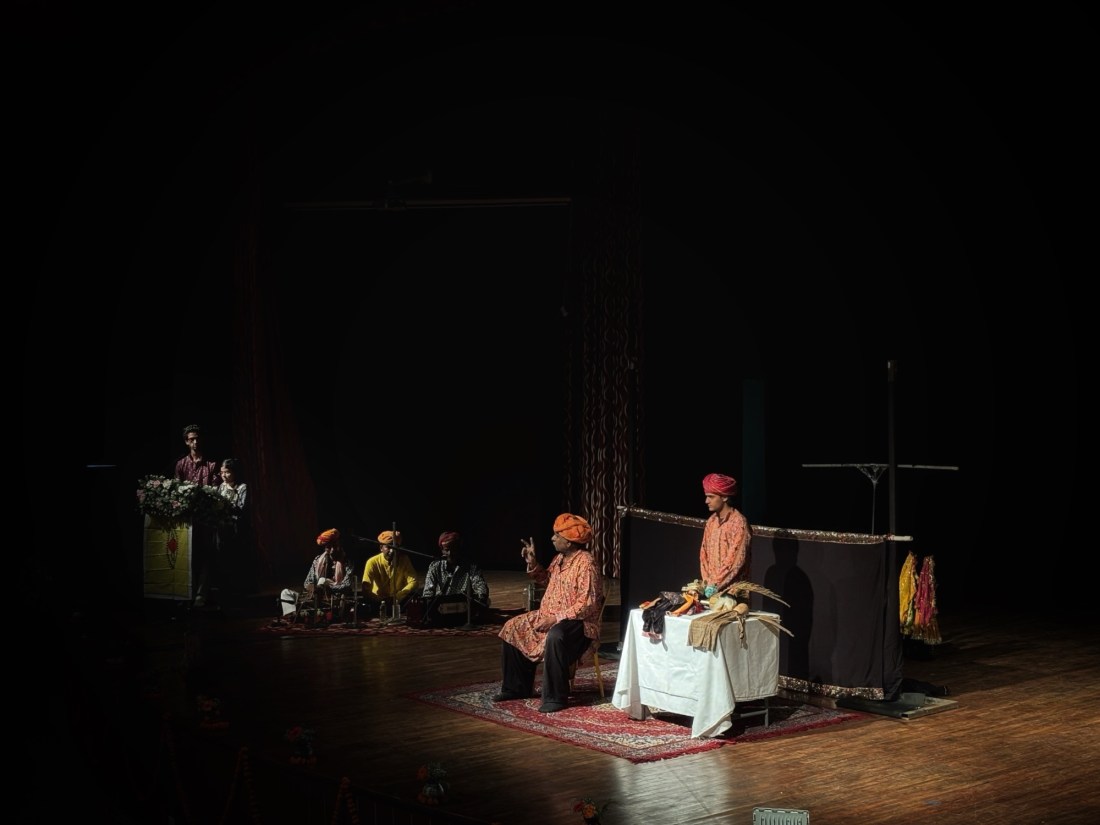
Performing Puppets or Performing Us: An Evening with Shri Puran Bhat’s Puppets

As is customary at SPIC MACAY cultural events, the show began in a conversational style, with Bhat ji asking and answering questions about the history of puppets and how puppetry, as an art, came to be part of tradition. He then elucidated the various kinds of puppets (based on the way they're handled), such as String puppets, Glove puppets, Rod puppets, and Shadow puppets, while demonstrating how they are performed.

Crossfade- Episode 4: Anatomy of Theatre

Derived from the Greek word 'theatron,' theatre refers to a place of viewing. To understand the structure of such theatre, consider it a room where the fourth wall is removed, allowing the audience to see what happens inside. A proscenium theatre is divided into two sections: the stage (where the actors perform) and the house (where the audience sits). Let's look at the stage first.

Crossfade-Episode 2: Asides-You Know but They Shouldn’t

The etymology of the word 'Aside' dates back to the 14th century, Middle English, meaning 'one side' or 'to the side.' It was popularised by the 15th-century Elizabethan dramatists in the Renaissance period, who used it to share comments, expressions, secrets, and humorous and witty remarks directly to the audience without involving the characters on the stage.