
Visva-Bharati represents India where she has her wealth of mind which is for all. Visva-Bharati acknowledges India’s obligation to offer to others the hospitality of her best culture and India’s right to accept from others their best.
-Rabindranath Tagore
I still remember the days spent at Viswa-Bharati, a university nestled in nature, waking to the shrill and soothing chirping of birds, where a garden brimming with multicoloured flowers led to the aesthetically pleasant houses, the name plate of whose in Bangla, beautiful girls in moderately embroidered tant, Jamdani or kantha or cotton saree, boys in white kurta with a cap on their head. Life moves at a slow pace there.
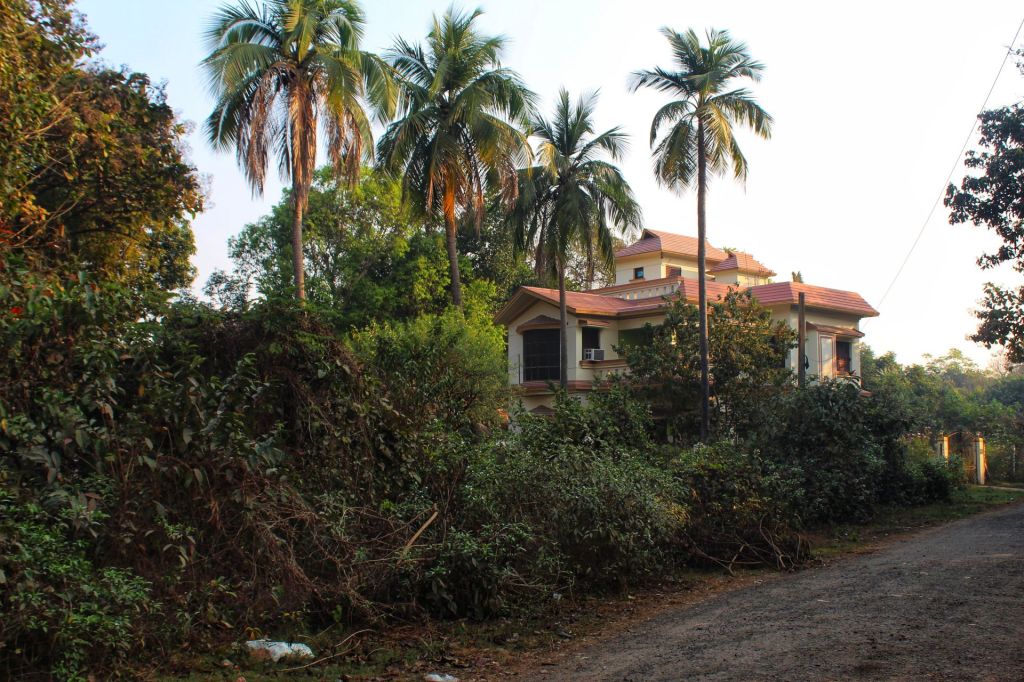
A university with a vision – defines Visva-Bharati aptly. Though there have been a lot of renovations and revisions, the imprints of visionary Tagore are reflected, the moment you step onto the campus, i.e. in architecture, departments, schools, quarters, playgrounds or libraries. Several structures on the campus have been recognised as heritage sites by UNESCO.
Let’s take a glimpse of the campus as I perceived it.
How to reach: You don’t need to go to Kolkata or Howrah if you are travelling via train. Durgapur or Bardhaman are better options. You’ll get local buses from there to Bolpur/Santiniketan. Trains from Bardhaman also run to Bolpur. Several trains, including Vande Bharat and Shatabdi, also ply from Howrah/Kolkata if you’re coming via the airport or these rly stations. The university is just 2 km away from the Bolpur bus stand and 4-5 km from Bolpur railway station.
Best time to visit: During the Poush mela, held on the 7th of December/January during harvest season and lasts for three days on the Santiniketan campus. You’ll get everything on campus.
Duration: Minimum 2 days. Keep one day for the campus and the other for the places around it.
Stays: I was there for a conference, hence I got a guesthouse on the campus. There are plenty of lodges, hotels, and resorts around the university, and one can book depending on one’s budget. If anyone is looking for a budget and fair accommodation, one can check Bolpur Youth Hostel.
Key places to explore: 1. Museum, Upasana Griha, Subarnarekha book store, Heritage sites and architectures, Departments such as Kala Bhawana, Sangeet Bhawana, inside the campus, etc. 2. Srijani Shipgram, Sonajhuri haat and Kopai river view. 3. Mud House for food.
Day 1: Let’s dive deep into the various places inside Viswa Bharati:
1. Rabindra Museum:
Timings: 10:00 AM- 1:00 PM; 2:00 PM- 5:00 PM, Wednesday and Thursday– Closed; Photography is prohibited inside.
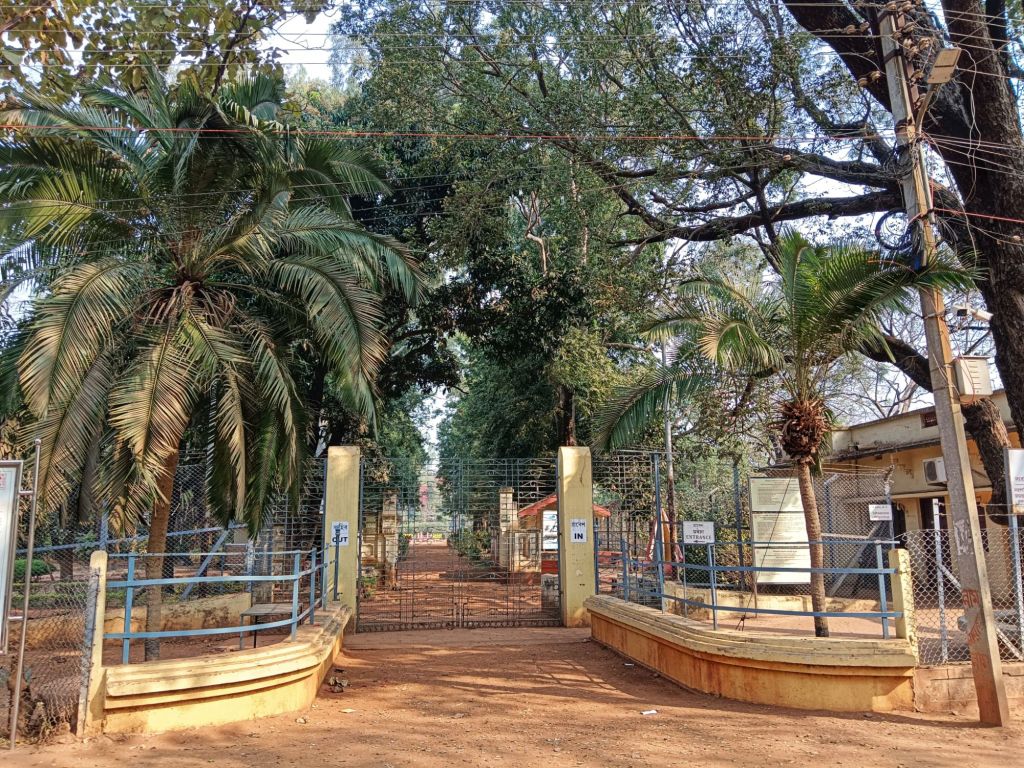
The most visited place inside the Viswa-Bharati, it comprises a permanent display section and the five homes lived in by Tagore in different seasons, collectively referred to as the Uttarayan Complex. The architecture of the houses, the interior decoration, and the pieces of furniture strewn about the rooms bring to life the persona of Tagore. This place will take you on a journey into the life of Tagore, where you keep wondering about his futuristic vision.
2. Upasana Griha/Kanch Mandir
Opens only on Wednesday morning. Only a White Kurta is allowed.

Luckily, I had the opportunity to visit ‘Kanch Mandir’, but I couldn’t arrange a white kurta, hence, I had to watch the proceedings from a distance. I found this tradition unjust, but a sanctity is associated with every place, and I was happy to uphold it. Kanch Mandir is a living example of the finest architecture, carvings and dedication to a person who is not a god but a guiding light. Unlike other temples, there is no statue. People gather there to recite songs written by Tagore (Rabindra Sangeet), pay a tribute to him and his contribution to enriching the lives of the people. The proceeding lasts for about an hour.
3. Santiniketan Griha
Located in the vicinity of Kanch Mandir, it’s the first abode of Tagore, where he stayed during the initial phases of establishing Viswa-Bharati.
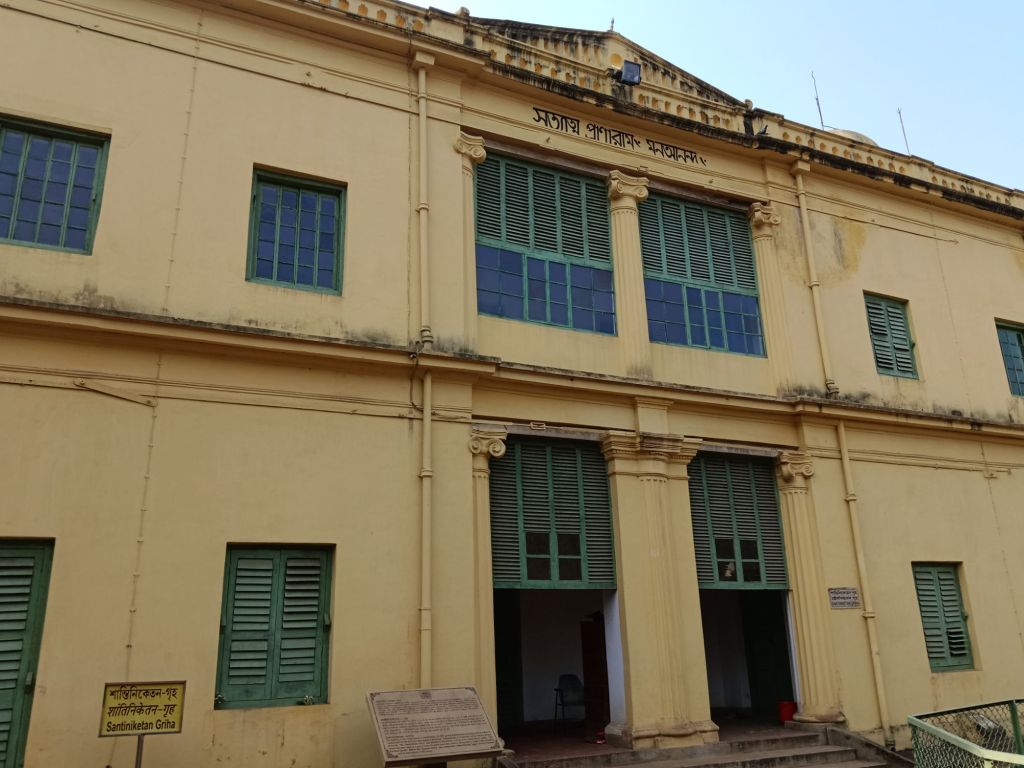
Tagore composed some of his works while staying at this place. Entry is prohibited inside the building, but you can take a walk around it while approaching it from the back side.
4. Subarnarekha Book Store
Timings: 10AM- 1 PM; 6 PM- 8PM, Wednesday closed

If you’re a book lover, you must check out this book shop on the Viswa-Bharati campus. It collects the old age books related to Tagore, the history of Viswa Bharati, among others.
5. Viswa-Bharati School
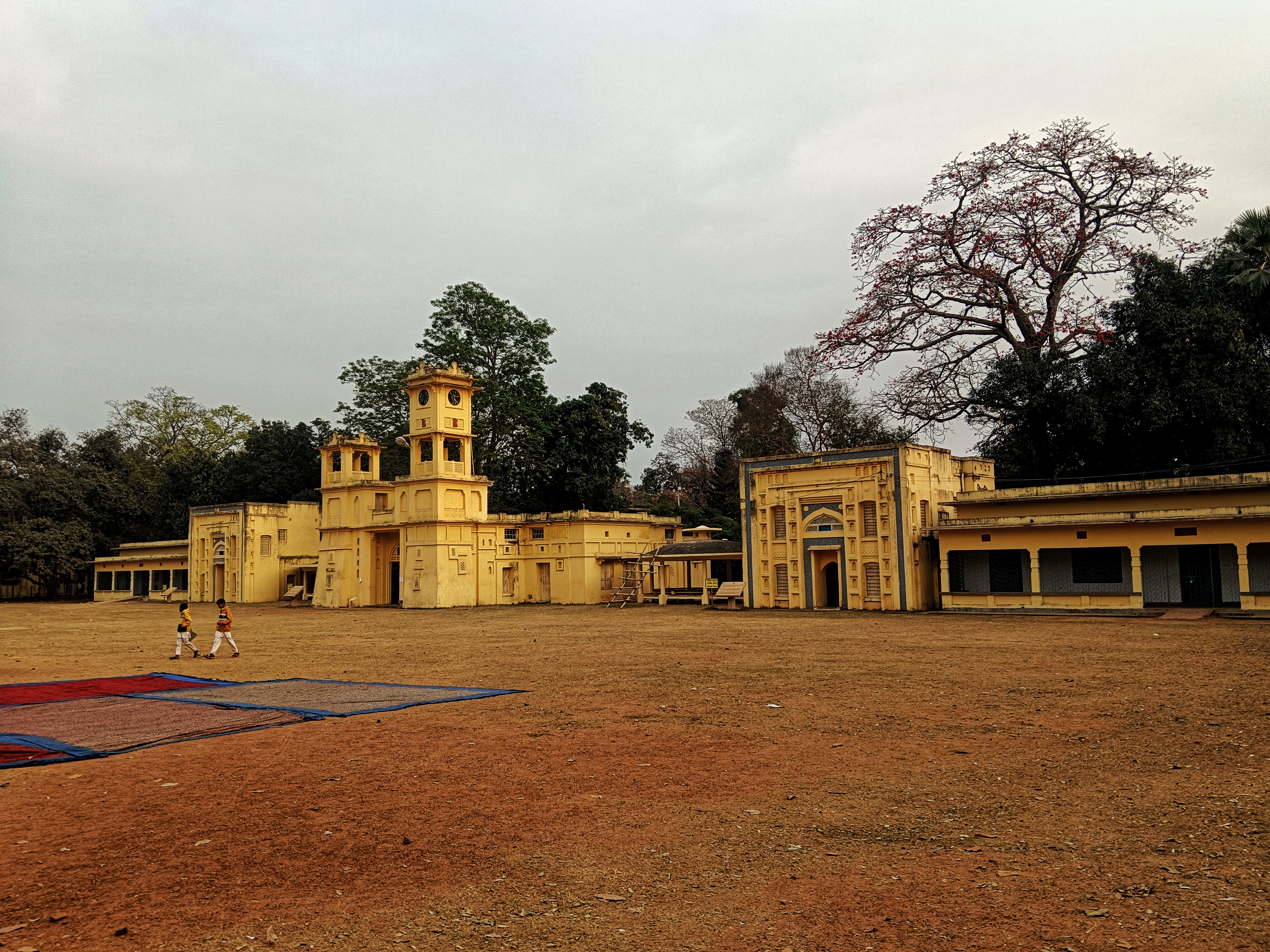
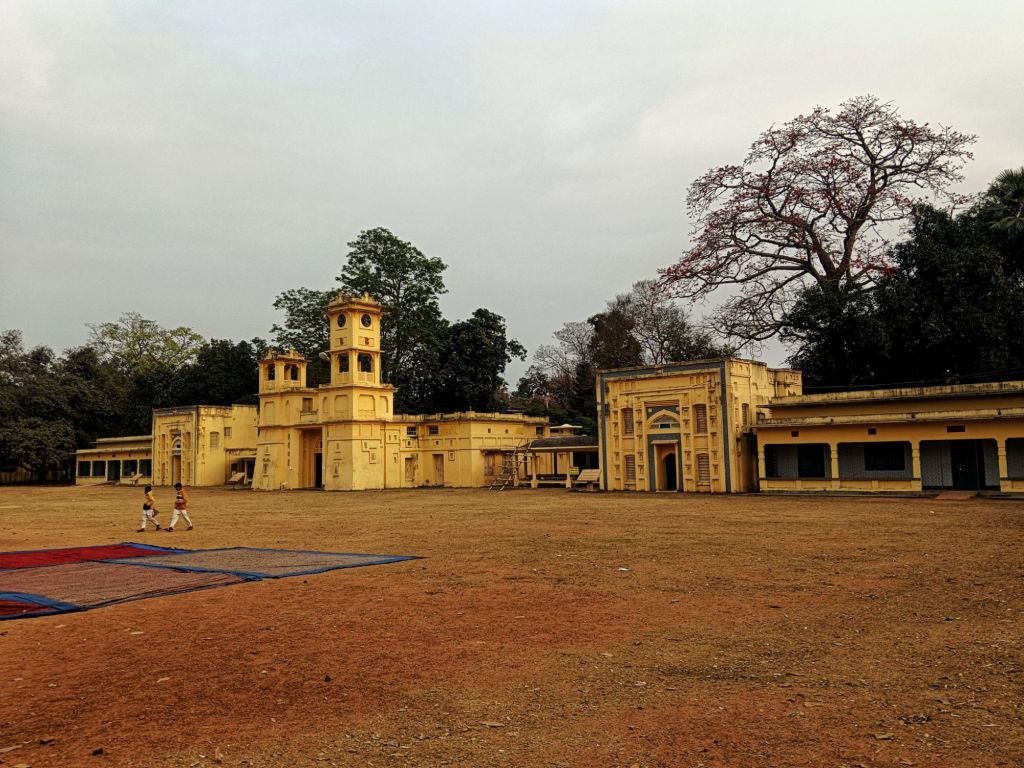
Visva-Bharati School, formally known as Patha Bhavana, is a division of Visva-Bharati University, educating students up to the +2 level. The second picture corresponds to the administrative building of the school, which is also recognised as a UNESCO World Heritage site.
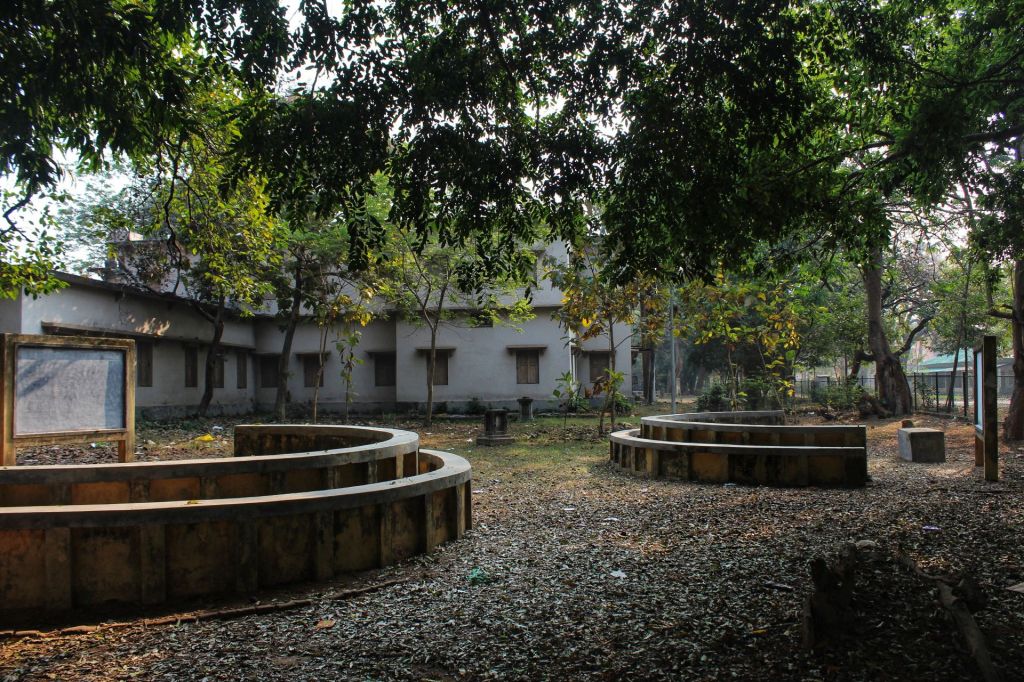
Founded by Rabindranath Tagore in 1901, it serves as the educational foundation for Visva-Bharati and emphasises holistic learning, open-air education, and fostering a strong association with nature. There is also a kiddie garden, designed for kids to gain knowledge with fun.
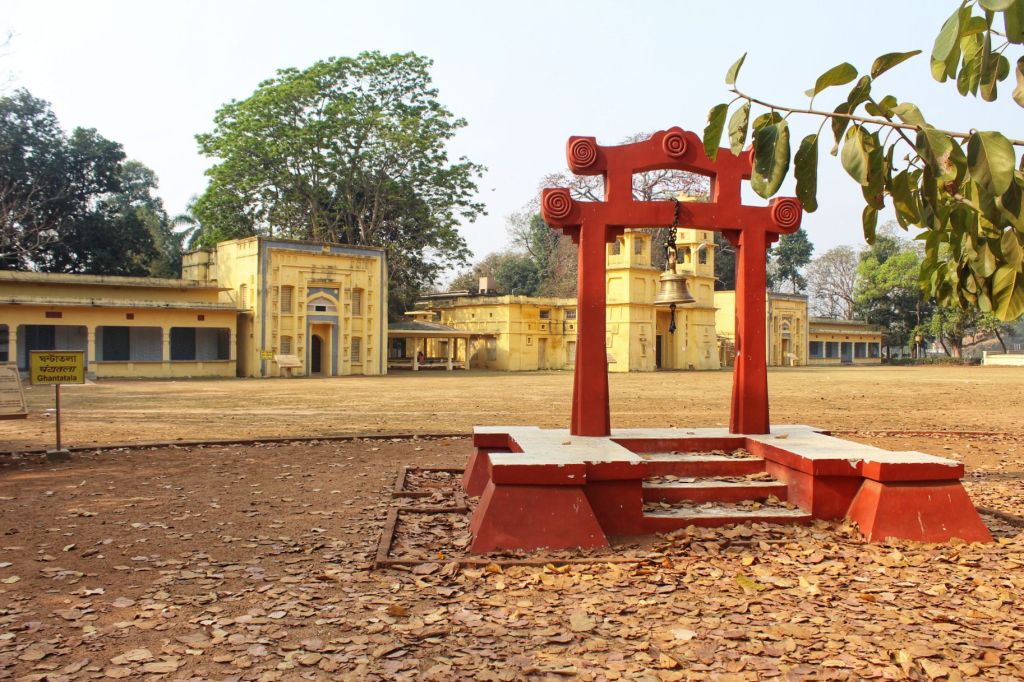
6. Dinantika
It’s located at a close distance from the Viswa-Bharati School.
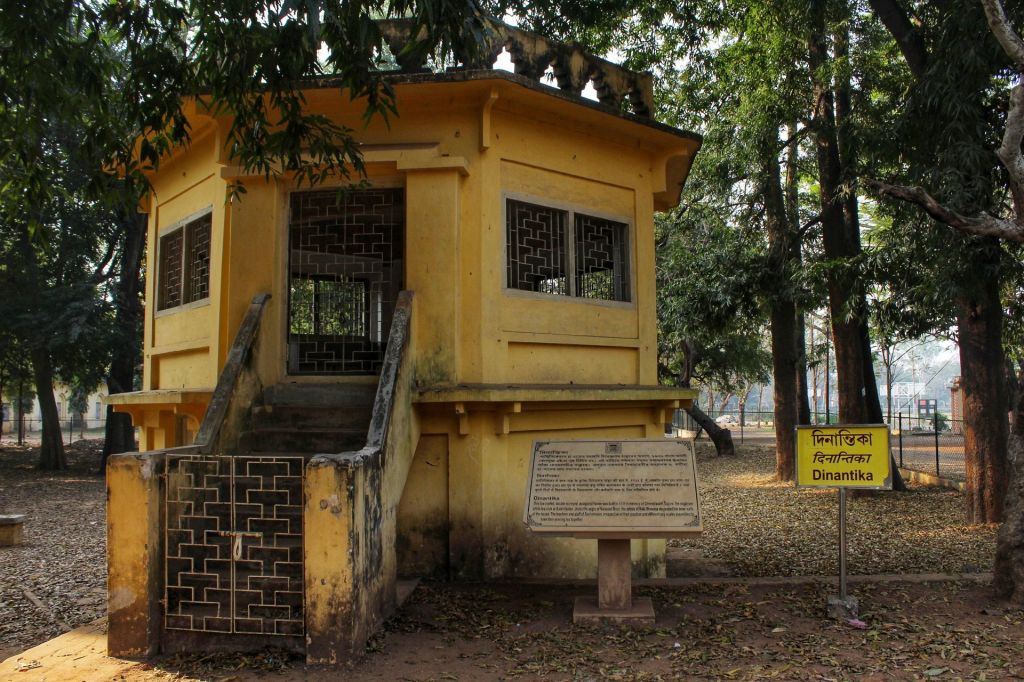
Dinantika was built in 1939. It’s an octagonal two-storeyed structure originally used as a tea-house with the staircase on the outside; staff members of Visva-Bharati would meet in the evening for a cup of tea and relaxation. It now stands closed.
7. Kala Bhawna and other departments
Each department is uniquely constructed as per the requirement, where nature is the only constant entity. I found Kala Bhawna very interesting, in particular. Students are engaged in different kinds of activities such as creating sculptures, paintings, handicrafts, artefacts and others.
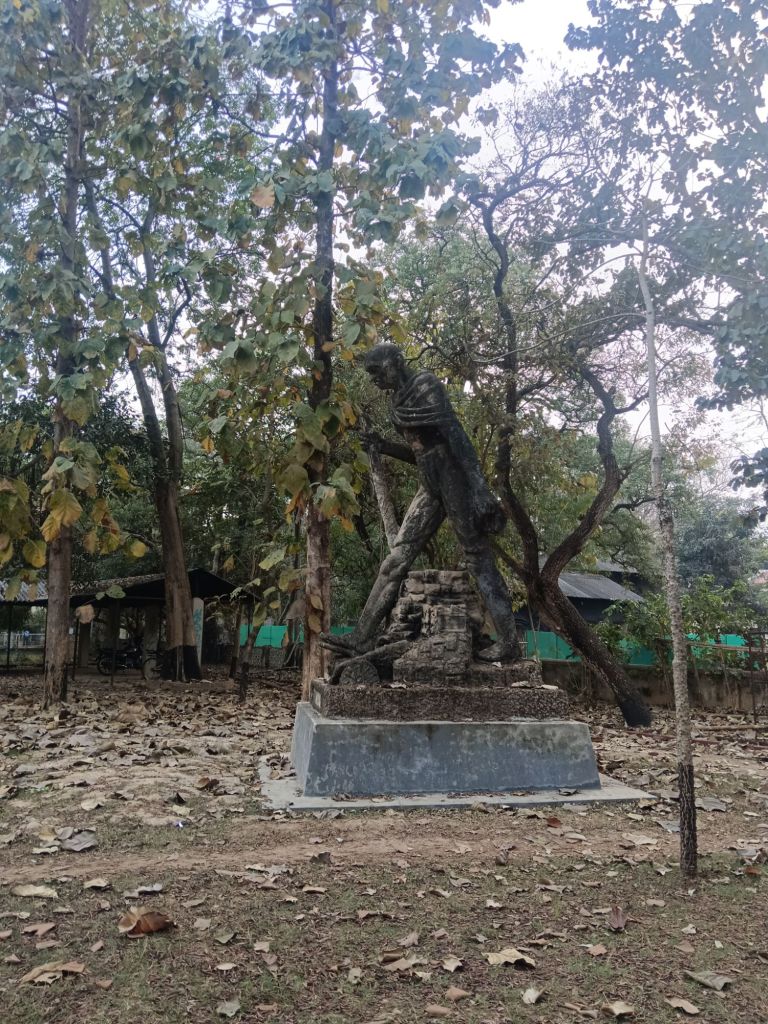
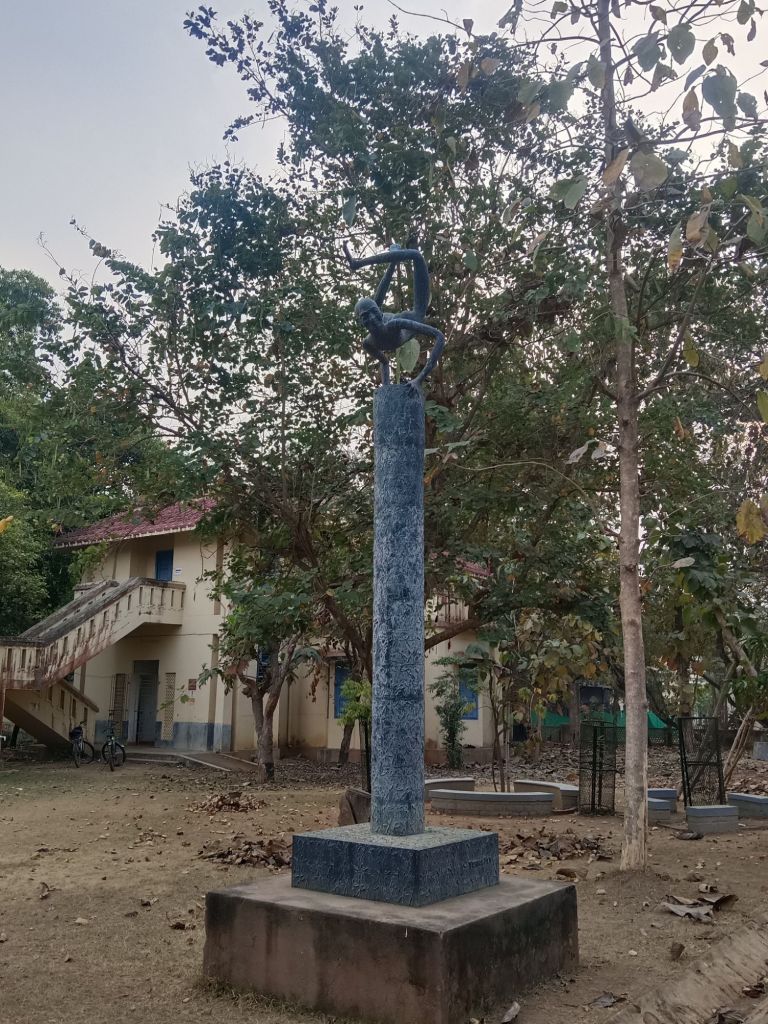
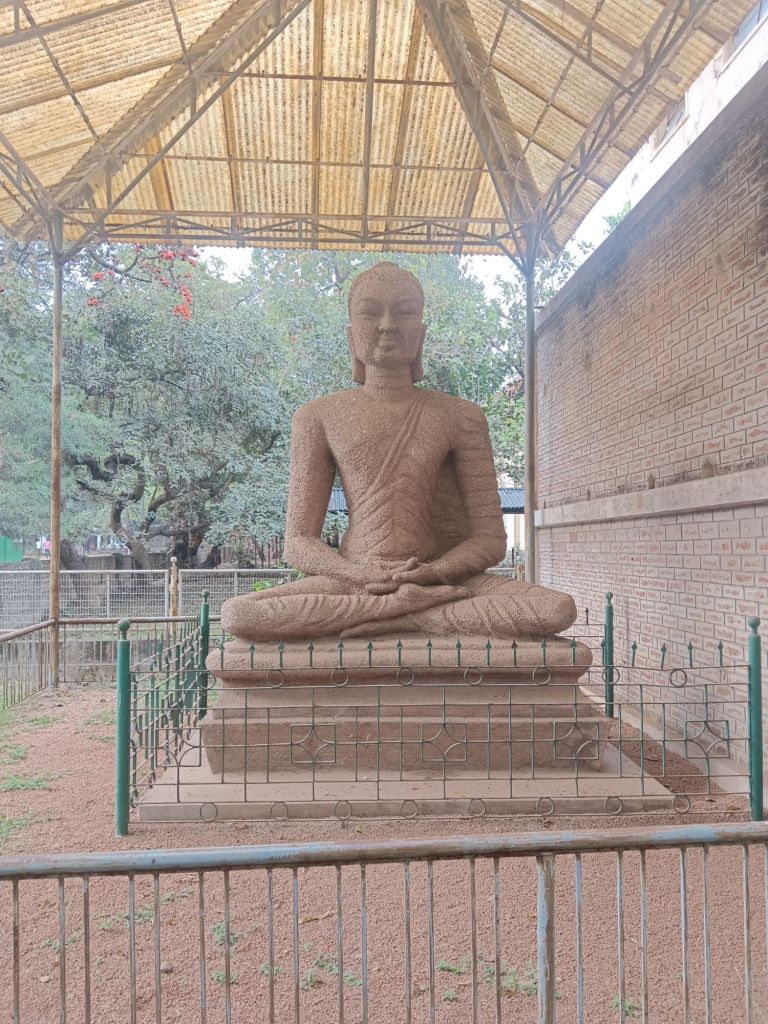
You’ll be surprised to hear the kind of courses it offers. They offer BFA (Bachelor of Fine Arts) programs in Painting/Mural, Sculpture, Graphic Art, and Design (Textiles/Ceramics/Glass), along with MFA.

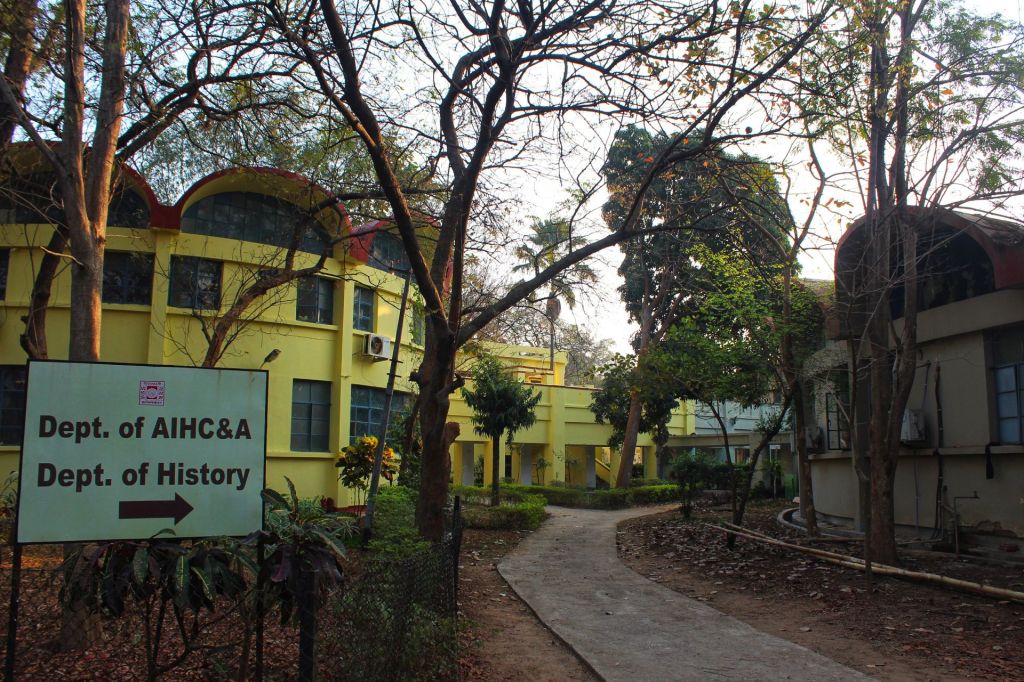
8. Taladhwaja
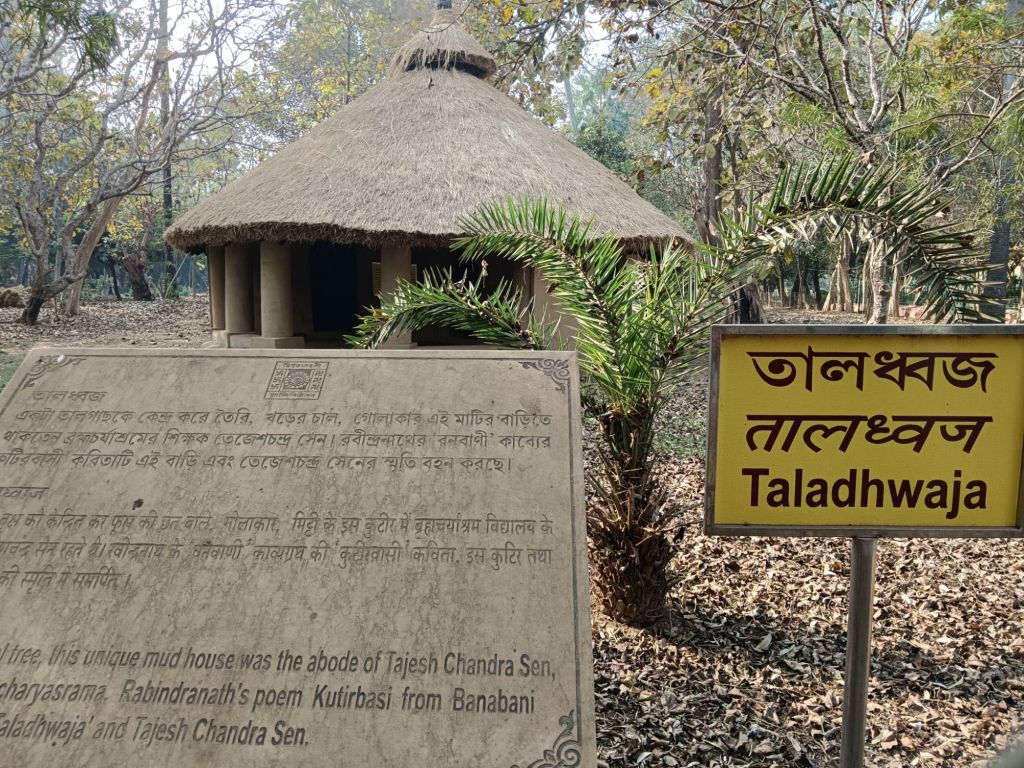
I didn’t see anyone entering this premise. However, you can take a look from the outside. The historical importance is written on the dais.
These two centres, i.e. Placement Cell and the Student Activity Centre, reminded me of my institute.
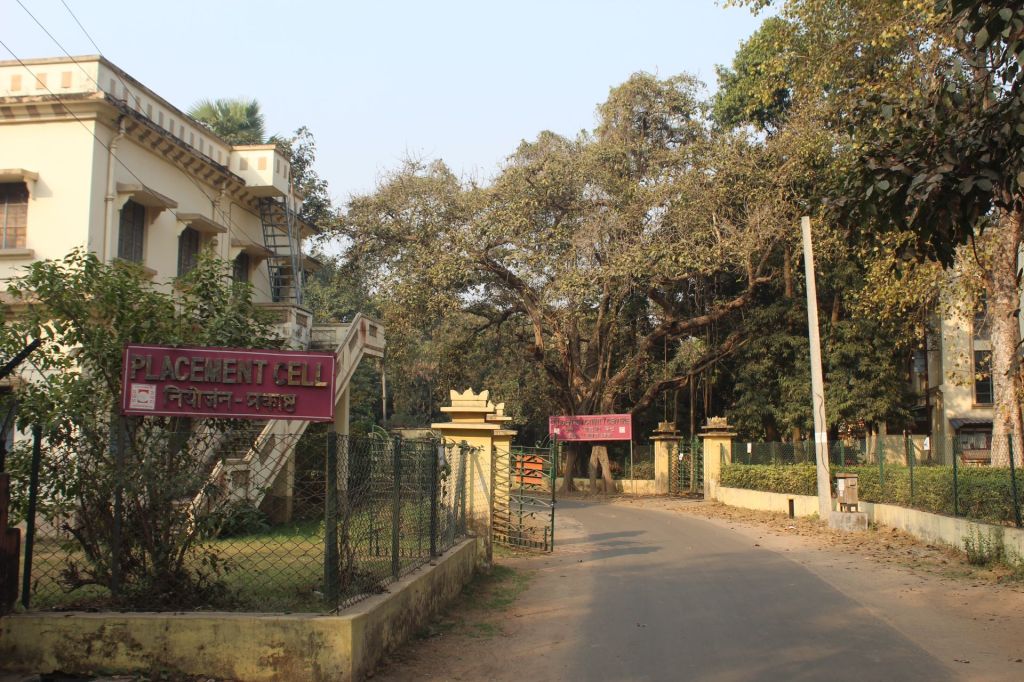
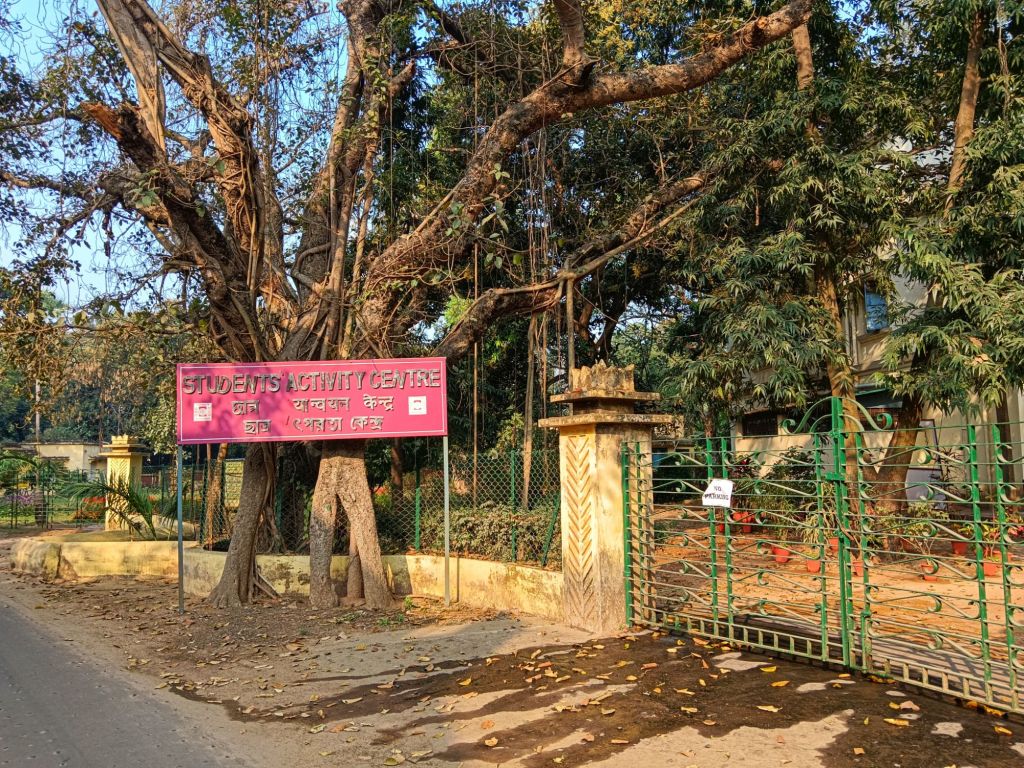
The story of the Viswa-Bharati campus doesn’t end here. It’s endless. You can only savour it to the fullest by visiting the university, spending some time there, and taking a close look at the departments, library and culture. One of the traditions I found unique is that instead of clapping, the audience gives ‘Sadhuvad‘ (they say Sadhu…sadhu) to applaud. A song is sung, which is an anthem of Santiniketan, before the commencement and culmination of every formal event.
Now, let’s see what’s there in the town for you!
Day 2: “Yahan bahar me jyada kuch dekhne ko hai nhi” (There aren’t as many things in Santiniketan (in the town to explore), said e-Rick bhaiya when I asked him to show me around. He belonged to Bihar, so we could talk in Hindi. However, if you love shopping, these places will delight you. You can fill your bags without emptying your pockets.
1. Srijani Shilpagram
Timings: 10 AM- 5 PM, All days; Entry Fee: 20/- (10/- on student ID) and 50/- for DSLR
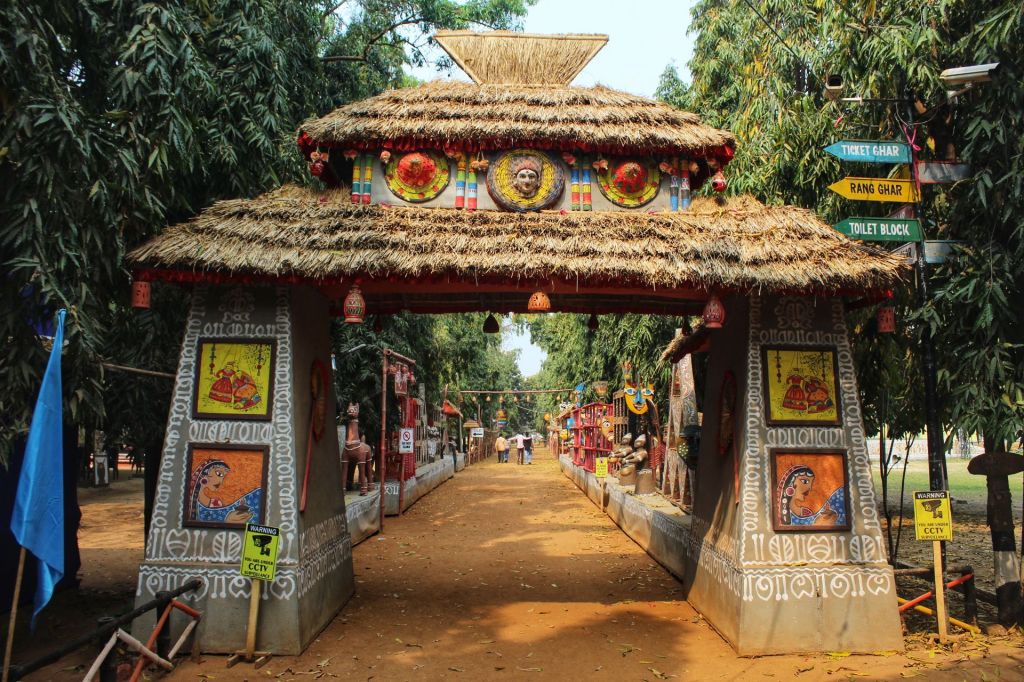
“Srijani badhiya jagha hai. Wahan kuch samay de sakte ho” (Srijani is the only place here worth going), E-Rick bhaiya further added. And the next moment, I asked him to take me there. It’s the centre for everything, especially culture and shopping. Huts of several states showcasing their culture, festivals, traditional clothes, utensils, occupations, and folk forms have been put up.
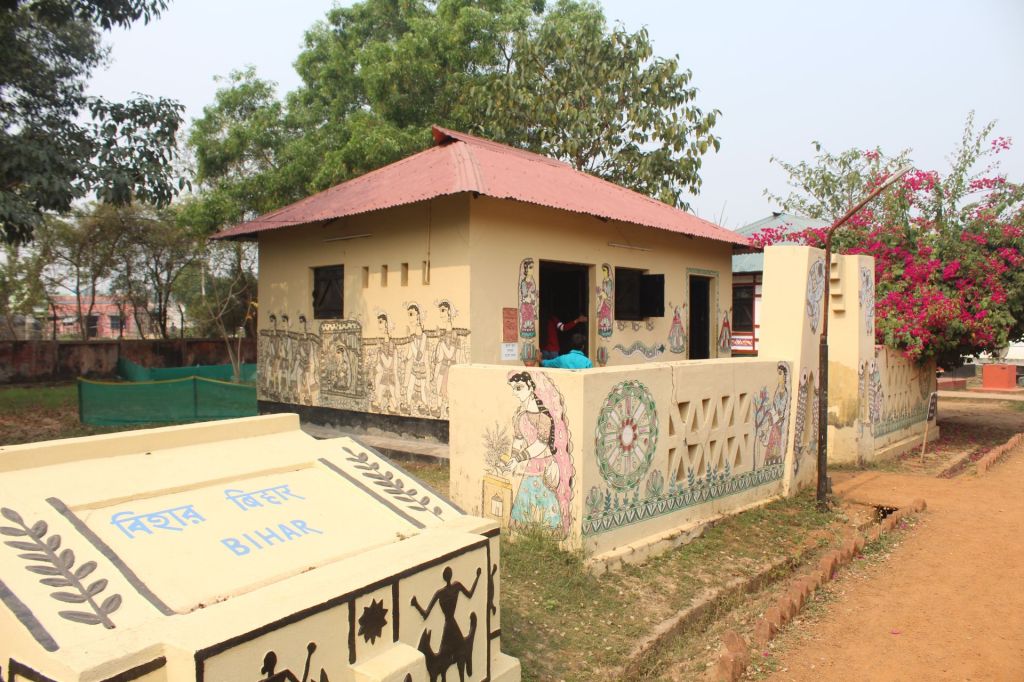
A show consisting of folk dance is also organised. There are miniatures/artefacts showcasing the life of the community. A section of Srijani is reserved for shopping. You’ll find multiple stalls selling sarees, bags, artefacts, handcrafted items and others. It’s a pleasant experience walking around the place and immersing yourself in varied art and culture.
2. Kopai River View
It’s the place where I had those conversations with e-rick bhaiya because I was disappointed when he took me here.
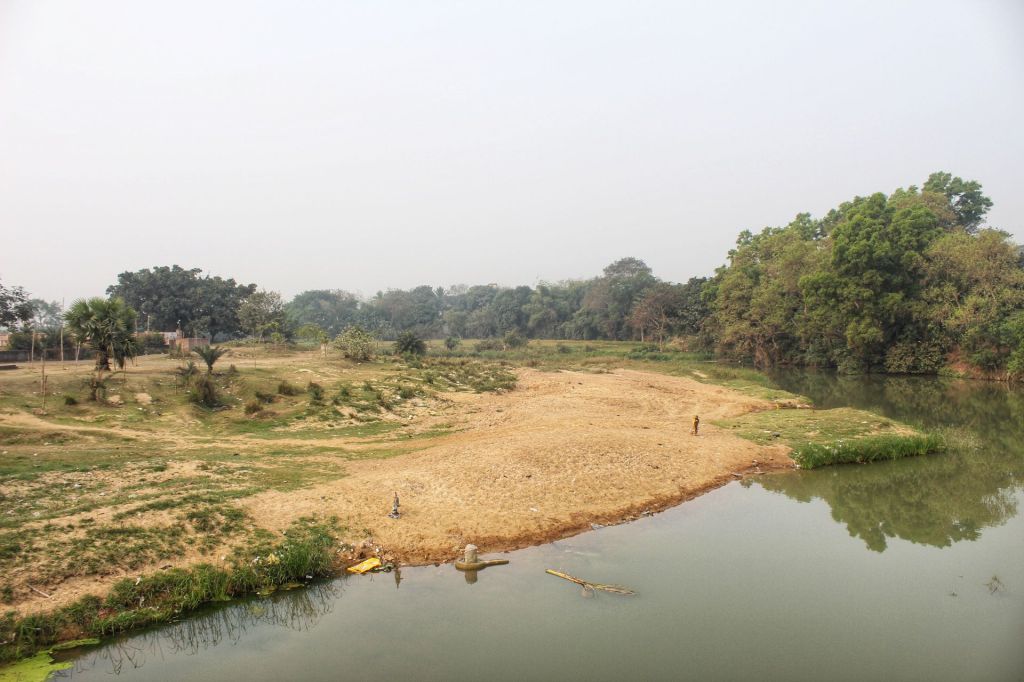
There is nothing to see as such, just a river which has dried up. Had the river been flowing, it would have offered a beautiful view. Later, a friend of mine told me its significance. Actually, Tagore was profoundly connected to the Kopai River. He wrote many poems and several songs were inspired by it, including the famous Amader choto nodi (Our small river).
3. Ballavpur Wildlife Sanctuary
Timings: 10 AM to 4 PM; Entry Free
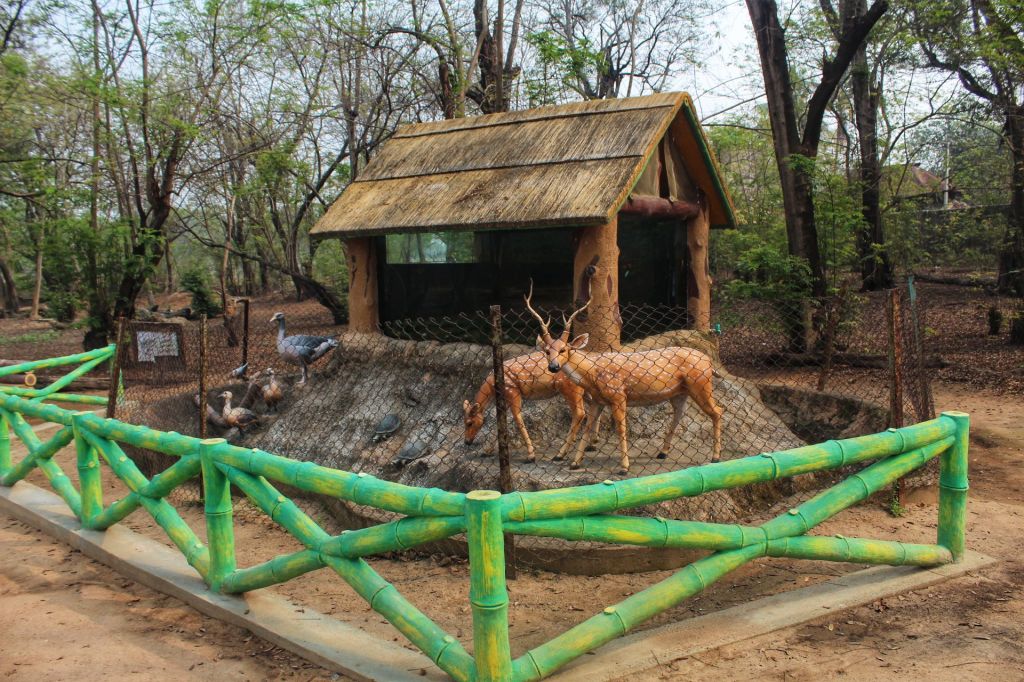
Previously known as Deer Park, most of the area in the sanctuary is reserved. You only get a trail of about 150 metres, from where you can sight deer from a distance. There is a watch tower from which you can have an expanded view.
4. Sonajhuri Haat
Also known as Sonibarer Haat (bazaar) or Khoai Mela, it’s a market under the open sky, shaded by Sal, Sonajhuri, and Piyal trees.
Timings: Open every day, but a vibrant atmosphere can be seen on Saturdays. It starts at 11, but I would advise you to visit in the afternoon to relish it to the fullest.

The place offers a range of handmade goods. You can shop for clothes, bags, shoes, toys, jewellery, kantha, blouses and crafts. Local artisans display their skills here. Like Srijani, Sonajhuri Haat isn’t just a market; it’s a cultural space. You can hear Baul songs, see tribal dances and also take part in them.
The gate no.1 of Viswa Bharati University also serves as a great centre of shopping. The price is relatively similar; the only difference is that you’ll get more options in the markets, allowing negotiate better. I’ll wrap up my travel blog to Santiniketan here. I gave you an overview of the place, things to see, without detailing much about the events or pictures, so that you can develop an interest in this place and plan your travel accordingly. I am sure you’ll get an unforgettable experience.
Let me know how you felt about the place. If I missed anything, let me know in the comment box. Also, I would like to show my gratitude to Amit bhai for showing me around, Preeti for shopping, Rahul bhai for lending me his bike and bicycle, and Sangita for highlighting the things to do in Santiniketan. Heartiest thanks for making my visit memorable.
©Shashank
All the pictures and content are subject to copyright. Mention the source properly if you’re using it.


Beautifully potraial of our amader Shantiniketan. There is a lot of places I don’t not visit place till today , but after reading this blog I have a lot to explore because I am very new here . Thank you for this .
LikeLiked by 1 person
Thanks Vaishali. Happy exploring 🥰
LikeLike
Great blog as always! And this time for travel too, so detailed and so meticulous. I am saving this for future 🙂
LikeLiked by 1 person
Thanks a lot dear. Pleasure is all mine ☺️
LikeLike
https://ryasktourism.com/shantiniketan-one-day-tour-package/
LikeLike