
Hi Friends!
It won’t be wrong if I state that the book-reading habit has been replaced by several addictive social networks on the phone. We do read books for academic purposes but when it comes to ‘hobby’, a significant decline is quite apparent. Some of my friends who belong to a technical or science background, the book I wrote i.e. Undergraduate Stories is the only book they have in their collection and in some cases, the only fiction book they read. Surely, there is a need to revive this habit. I am still trying to figure out ‘how’? I’ll talk about it in the next ‘review’ section. For today, let’s take a look at this interesting piece of work.
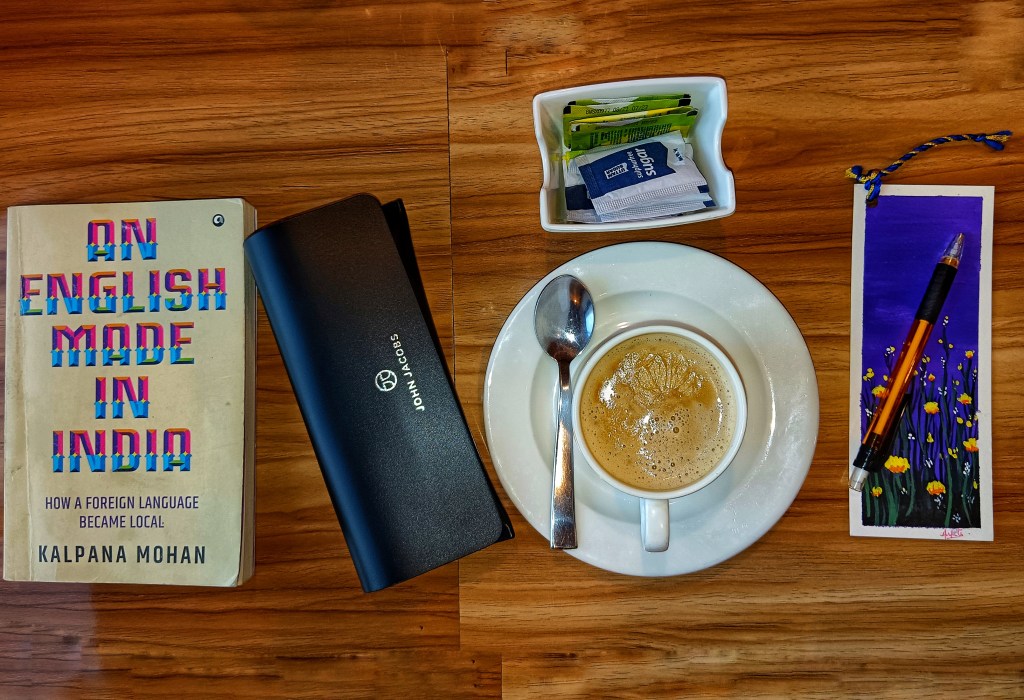
Title: An English Made in India
Author: Kalpana Mohan
Genre: Non-fiction (with a bit of travel narratives)
Publisher: Aleph Book Company
Distributor: Amazon (Click here to buy/view)
Pages: 218
Best Buy: Rs. 181/- (amazon) Marked Price: 399/-
Though non-fiction, this book is an interesting read as it blends knowledge together with travel narrative in story-telling mode. The Author shares her experiences of travelling to different places in India, reflecting upon the condition of English in that particular place. The book is very helpful to linguistic students as it lists out the intricacies associated with the way the ‘English’ language is used in India in different regions be it the schools in Himachal or the People in South.
The subtitle How a Foreign Language Became Local is quite apt as it also touches upon the nativisation of the English language. The book also lists a set of words that is Indian, taken from vernaculars and is part of English vocabulary now due to its extensive and repeated use.
It has been divided into eight chapters as mentioned below:
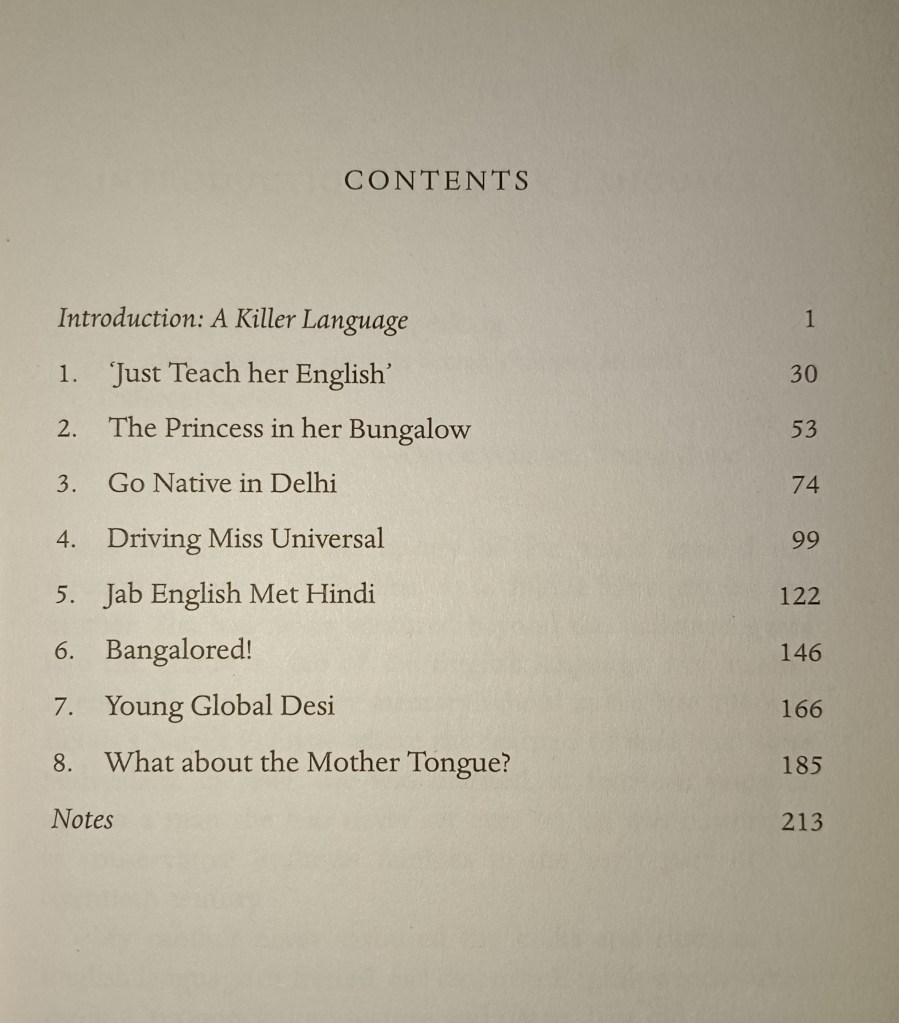
Yes! As foreseen from the content, the book has a touch of humour and a couple of times, dark humour too. It also comments on the colonial rule and the difference between how they used it and how we’re using it. The other aspect for which I would like to praise the author is the use of ‘vocabulary’. I’ll definitely recommend this book also to those who are looking forward to enriching the words in their repository. You’ll have to unlock your phone several times to look for the meaning of the words but I think that’s what the purpose of the book is.
However, I feel that the book could’ve been more friendly, be in terms of language or content. A couple of times, you’ll find losing your interest, especially when you don’t have a keen interest in language. Also, several references have been quoted from literary works which can be both interesting and uninteresting for students having a background in literature and non-literature respectively. But, it’s equally true that no book can address every section of society.
I’ll be visiting one more time to take notes of the native English words, besides enriching my vocabulary. It’s definitely a one-time read for everyone as we all are trilingual speakers and English is a lingua franca connecting us.
-Shashank
 Pragmatic's Personas