
The bumble-bee came- Strutting among the flowers, strumming love….’
– Bapsi Sidhwa
How does it feel to revisit the horrors of partition 78 years after it? Can we actually feel the gravity of situations? Though most of us haven’t seen it with our eyes, reading someone else’s experience takes us through a range of emotions. The atrocities, the people were made to go through were much more than we can think and feel.
This book has been part of my shelf for 5 years as it was in my UG course. At that time I watched the movie 1947 Earth, which is based on it to get an idea. Reading it in 2024 feels like I could’ve done better in exams if I had read that time.
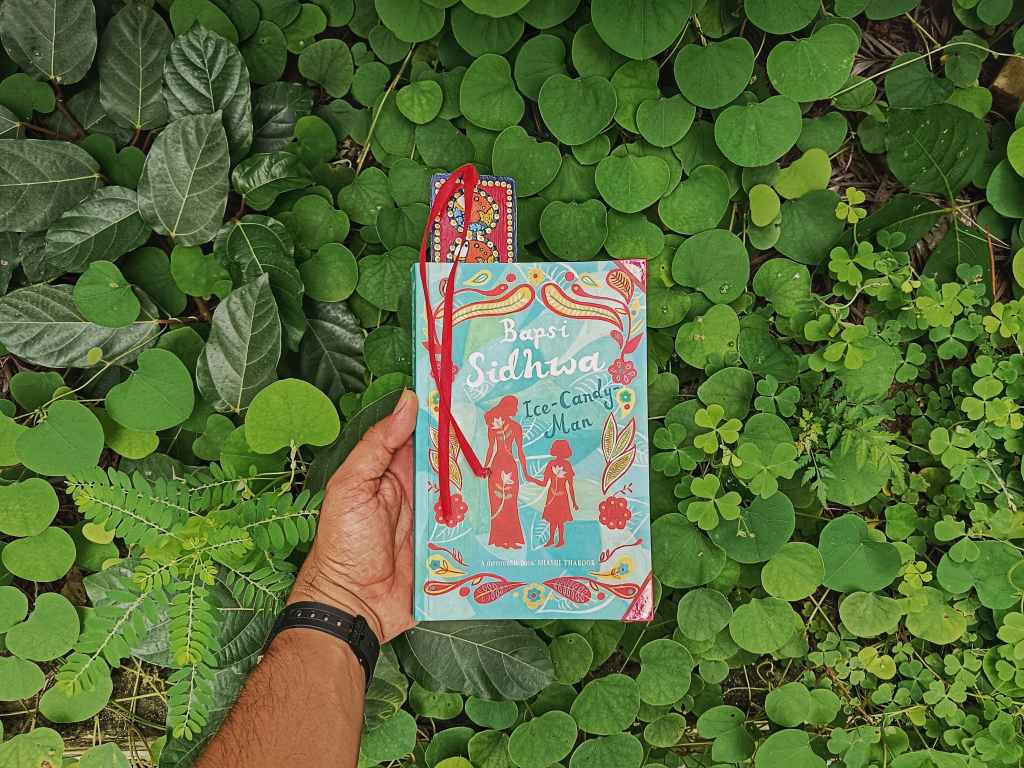
Title: Ice-Candy Man
Author: Bapsi Sidhwa
Publisher: Penguin (1988)
Genre: Non-fiction
Pages: 277
Price: Lowest Price (204/-) at Amazon, at the time of writing this review.
Ice-Candy Man is one such book whose title doesn’t reflect its content. I mean, the quote “Don’t judge a book by its cover” fits perfectly here. Written in 1988, 41 years after partition, this book delves into the intricacies of partition amidst the growing communalism. This book is unique in the sense that the story has been told through a child narrator, who is 7-8 years old who belong to the Parsee community. Revisiting the horrors of partition through the perspective of 8 years old girl unfolds many new things that haven’t been talked about before. The foremost is ‘growing up’ amidst all these communal tensions. It is also interesting to note how a ‘woman’ and love unities the persons belonging to different religions. By including a Parsee narrator, Sidhwa is trying to have an unbiased or neutral approach to the communal tensions existing in India among different religions. In the ending chapters of the book, ghazals and shayaris with translation have been told to heighten the engagement of the readers.
Though the book is an extensive account of partition, sometimes, Sidhwa details trivial things in detail which diminishes the interest of the readers. I certainly recommend this book to someone interested in the history of working on the partition as their research area.
©Shashank
 Pragmatic's Personas