

You know- What’s the best time of the year?
Deepawali at home.
And the bestest? (if such a word exists)
It’s Chhath Puja!
Chhath Parv comes like a blessing that doesn’t let the joy of a day’s Deepawali fade away soon. Unlike Deepawali, which is celebrated like a compulsory ritual, the festival of Chhath is organised only in selected homes. Perhaps, due to its divinity, extensive rituals, and piousness that need a lot of effort. You should have some people around you to help throughout the festival. Nonetheless, even if you decide to perform the Puja, your neighbours and relatives will come to help you even before you ask. This way, they feel that they are part of the festival and the blessings which come with it. Also, people prefer to celebrate it in groups. Once you decide to be a part of this festival, relatives will join you as a Vartin (those who perform Chhath Puja). This way, it becomes easier due to the moral support and more helping hands. Also, women of the household usually perform the Puja but there is no restriction as such.

This time, my mother and aunt decided to perform Chhath Puja. It was being celebrated after years in our home. Luckily, I had saved enough holidays to ensure my presence at both festivals. My friends often asked me, “What this festival is all about and the reason for people’s utmost faith in it”. Hence the reason, I’ve decided to peep into the various nuances associated with this festival which extends to four days in this blog.
1.Nahaye-Khaye
It’s the first day of the festival. Chhath Vartin takes prasad prepared with great care in copper and bronze utensils (kept for this purpose) over chulha lighted by wood or cow dung. In cities, people also prepare prasad on a separate gas/stove, kept separately for this purpose. Care should be taken that it shouldn’t be jootha or brought in contact with everyday utensils.

Before setting up the chulha, the entire place is cleaned and washed thoroughly. Only then, any proceedings like cutting vegetables, and preparing prasad take place. If anyone is contributing to it, they are expected to take a bath and wear fresh clothes. Generally, an open space is preferred. The house’s Kitchen is closed for the day. Each of the members of the family is expected to observe fast till the vartin have their prasad. Only after that, anyone can have prasad. The fast is broken around the afternoon. After that, Invitations are sent to neighbours and relatives to have Prasad. The idea is to purify and prepare yourself for the upcoming days.
2. The ‘Kharna’ Day
The 2nd day of Chhath Puja, also known as Lohanda (in the regional language), has the utmost importance. Again, the prasad (usually kheer made in jaggery and milk) is prepared with great care in sacred utensils. Some households also go for chawal-dal prasad. The place, if not different from yesterday, should be cleaned and washed thoroughly.
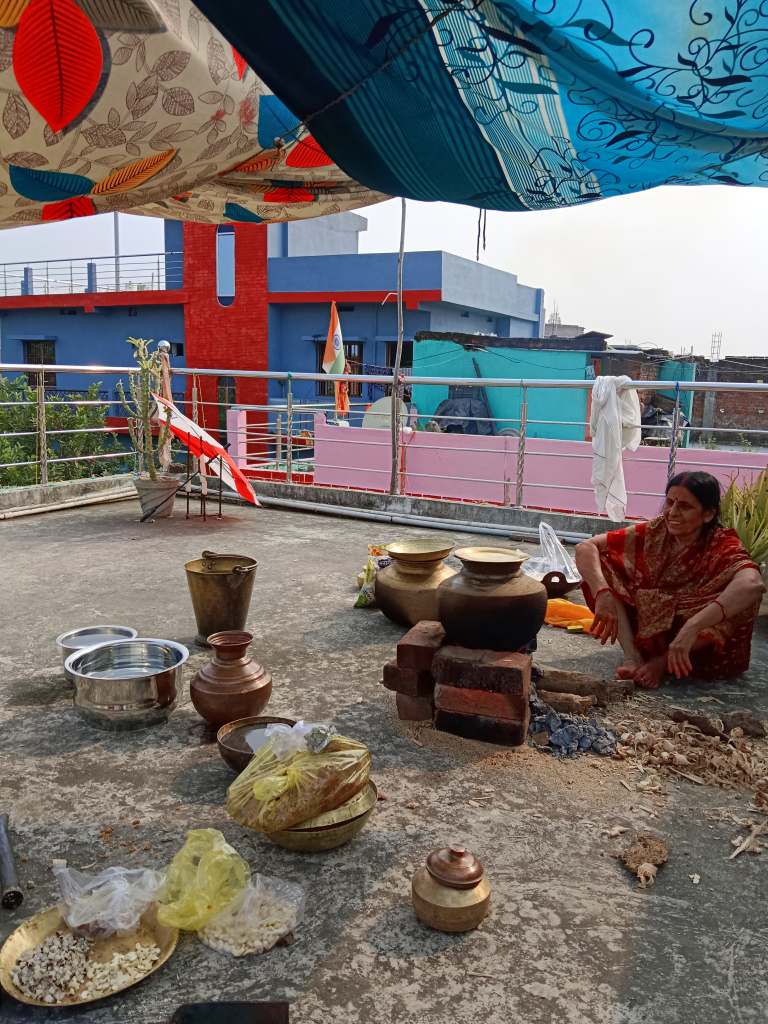
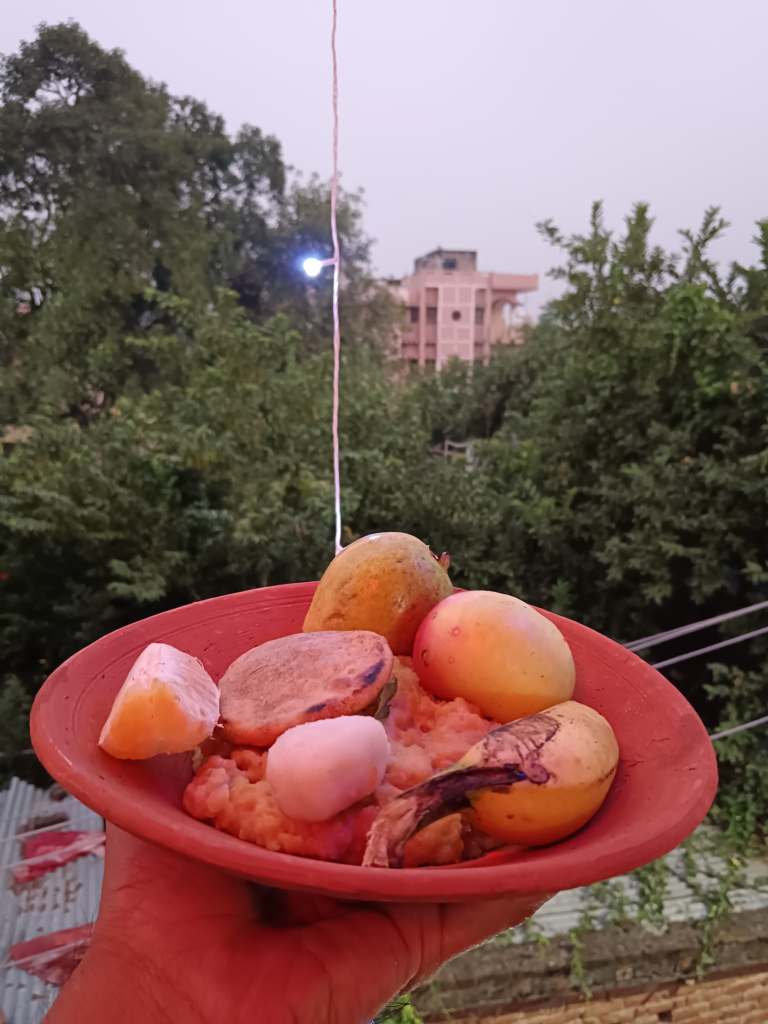
Also, the water to prepare the Kheer prasad should have a holy touch. Hence, it’s fetched from the wells inside the temple. Prasad is offered to Sun God first. Hence, a proper ritual takes place in the evening where Chhath Vartin worships the God concerned and women used to sing folk songs/Lok Geet listing the contribution of family members. After that, Chhath Vartin takes the prasad along with some fruits which is followed by family members, relatives and neighbours. A special plate is kept for sons and daughters (known as neuj in regional), for whom well-being, the Chhath Puja has been initiated.

It should be noted that after Nahaya khaye prasad, Chhath Vartin doesn’t eat anything till the Kharna prasad. Some even choose to be Nirajal i.e. without even drinking water. They keep visiting till late at night according to their convenience. Also, there isn’t any restriction as such that those who have been invited, only they will come. People belonging to any caste, creed or community can have prasad.
3. Evening Arghya
The word ‘Arghya’ in Sanskrit means ‘something/someone which is worthy of being honoured’, here it’s the Sun God. Unlike the two rituals illustrated above which happen at home, you need to visit the water source commonly known as ghat (in local) such as a river, any lake or any pond for the remaining two. For those, who don’t have access to these, a pool-like water source is formed at the terrace or garden for this purpose. On this day, Chhath Vartin and the helping members wake up early in the morning to prepare the famous thekua prasad. We visit the market to purchase a variety of fruits which will be used for the prasad along with thekua. In the evening, Chhath Vartin, family members, relatives and neighbours are led by one member carrying Daura (a basket in which all the stuff for the ritual is kept) to ghat– basically on the bank of the river for the evening Arghya.

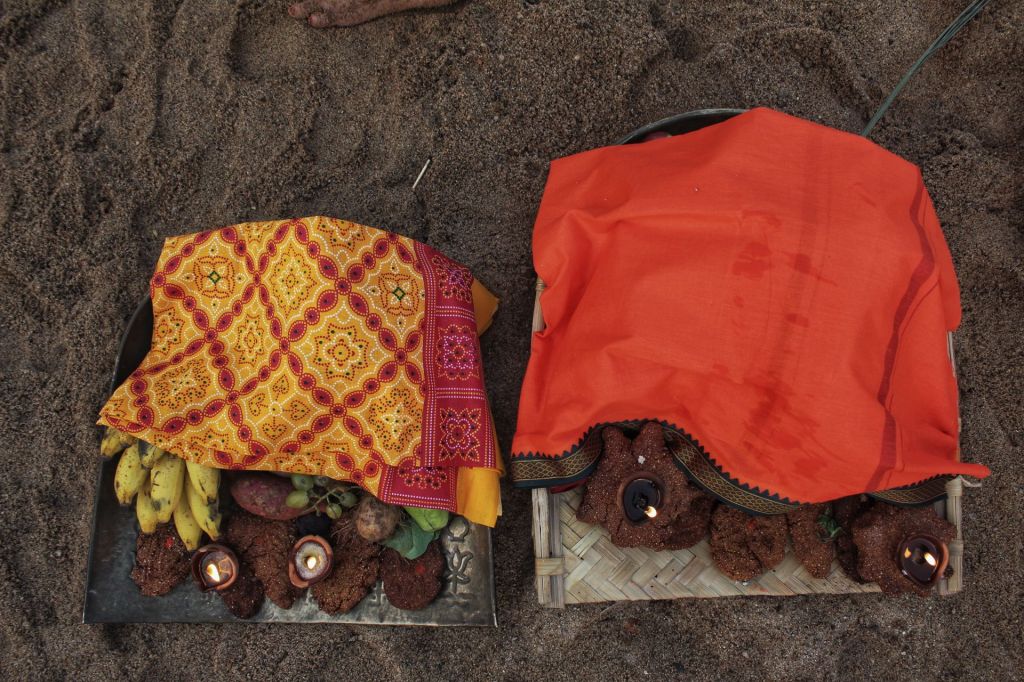
Throughout the way, Lokgeet is sung by the women. After dipping themselves or taking a bath in the holy water, Chhath Vartin make offerings to the Sun God which is about to sink in the horizon. The other members pour water at their feet while they do parikrama (circumbulatory) at their place in the water. In this process, they also hold soop in which prasad like thekua and fruits are kept to offer to God. It’s followed by Yajna where everyone offers humad (a kind of wood used in religious ceremonies).
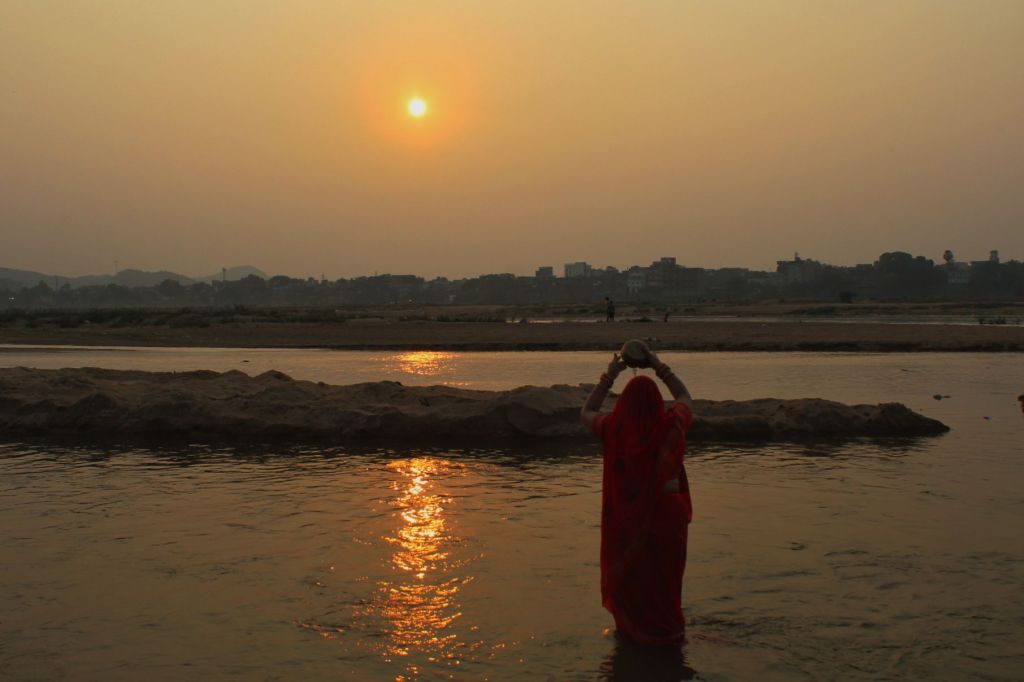
The day comes to an end. Everyone returns to their home to prepare for the next day. You’ve to wait for some more time to have Prasad. Vartin observes fast throughout the day.
4. Morning Arghya
The final day of Chhath Puja is one of a kind and occupied with unusual fervour. It’s the day of delight and divinity. Everyone reaches the ghats before sunrise. Chhath Vartin, after taking a bath in the river, stands in the water in wet clothes till sunrise in prayer, sometimes shivering due to the fall in temperature but standing firm as their faith provides them necessary strength. Children are engaged in bursting crackers. The elders stand on ghats and keep discussing one topic after the other. In this fast-paced life, the interaction among the community has become less but everyone comes together to celebrate this day. It’s the day when we meet and greet our old friends. Everyone waits for the sun to cross the horizon to have a first glance at them.
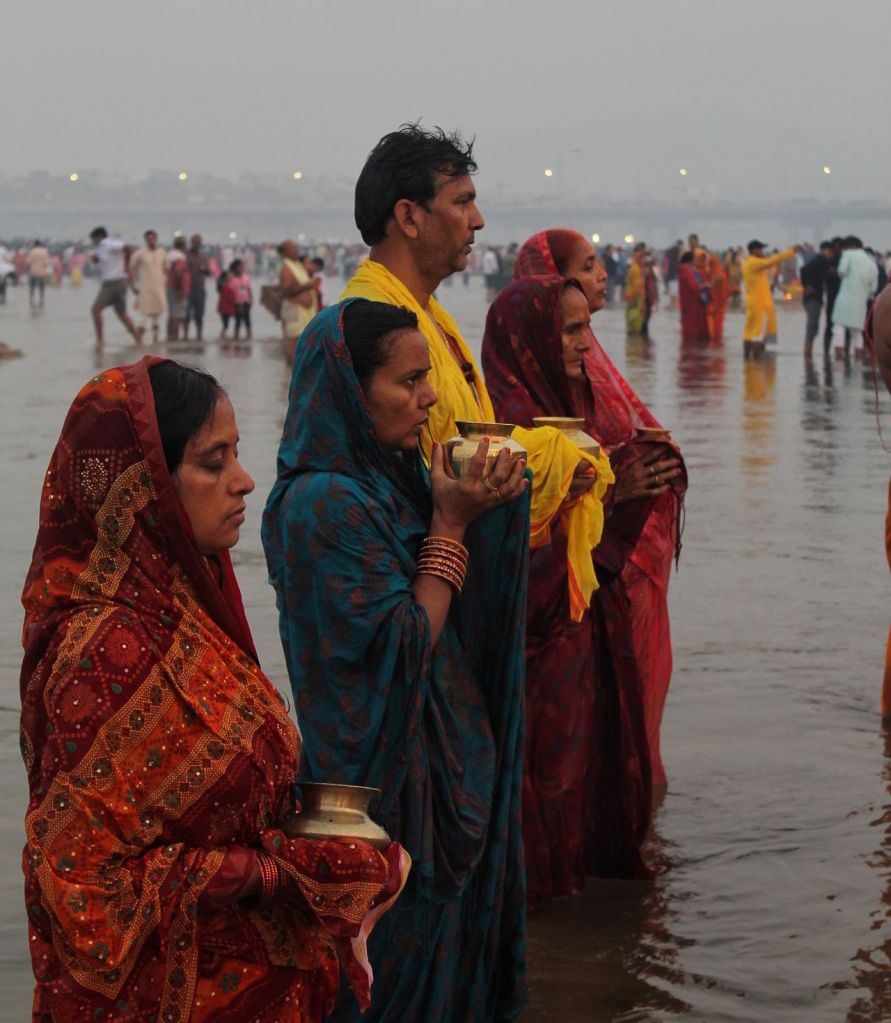
The clouds sometimes delay them further. Nonetheless, after some time, their prayer gets answered. The Sun God emerges with unusual radiance as compared to the other day. The rays of the sun implant a new life for everyone out there. It rejuvenates them. The rituals for the day start. It’s somewhat similar to what was observed on the first day. But instead of water, milk is used for the Arghya.

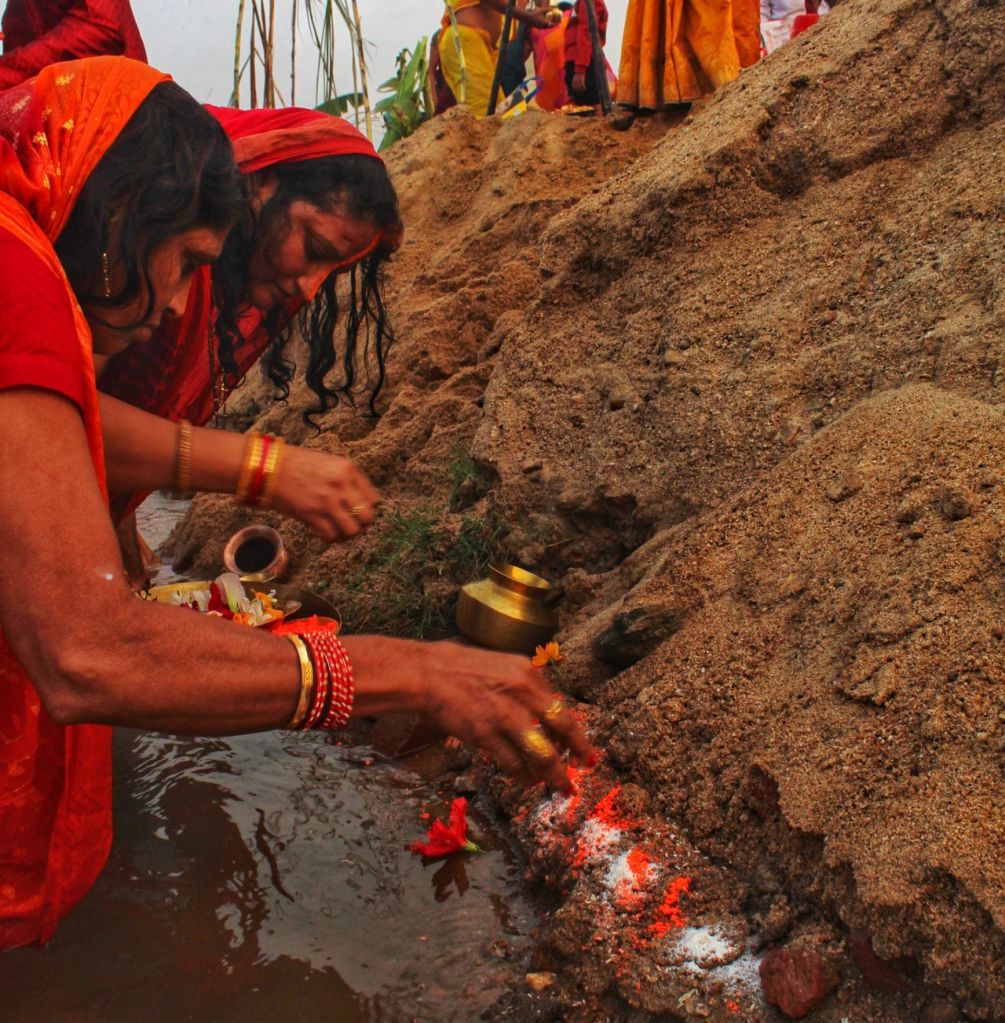

After hawan, Prasad is distributed. We bade goodbye to Sun God with a promise to meet next year. Chhath Vartin also breaks their almost 48hrs fast this day. Some households also choose to invite neighbours and relatives to have food. The four-day festivals come to an end here.
Thoughts
There are several folk stories in tradition, answering the question as to why Mahaparv Chhath is celebrated and the stories vary from region to region. The idea is to pray for the well-being of the family members and keep them safe and sound. Also, if someone wishes something and it gets fulfilled, Chhath Puja is a way to offer their homage. Many celebrate it for the completion of their wishes. Hence the reason, it’s called Aastha ka Mahaparv. This festival originates from faith and ends in faith. One of the assumptions behind Sandhya and Subeh ka Argya is the underlying ‘Hope’ that what has set will rise again. There will be a new day, a new morning. And morning shows the day. The day is going to be beautiful.
Note: There are many meanings, rituals and other things inherent in this four-day festival. People belonging to different regions celebrate it in different ways. Also, with time, festivals go under evolution. Newer elements are added and the older ones are forgone. But the basic ideas remain the same, which I’ve tried to portray here. If yours is different, I would be glad to hear it from you.
©Shashank


Very nice explanation.
keep it up.
LikeLiked by 1 person
Thanks Bhai ji
LikeLiked by 1 person