
Watching puppets perform is the same as watching humans. The only difference is, puppets perform at the stage whereas human in real.
Before I begin this post, I pay my sincere gratitude to Dr Kiran Seth and his initiative SPIC MACAY (Society for the Promotion of Indian Classical Music And Culture Amongst Youth)- a noble step toward reviving art and culture, rooted in Indian tradition. Most of the major institutes and universities have a society with a similar name that hosts several programs and invites artists to showcase the talent they have earned through their years of practice and dedication. The art form should be Indigenous and highlight essential aspects of Indian culture.
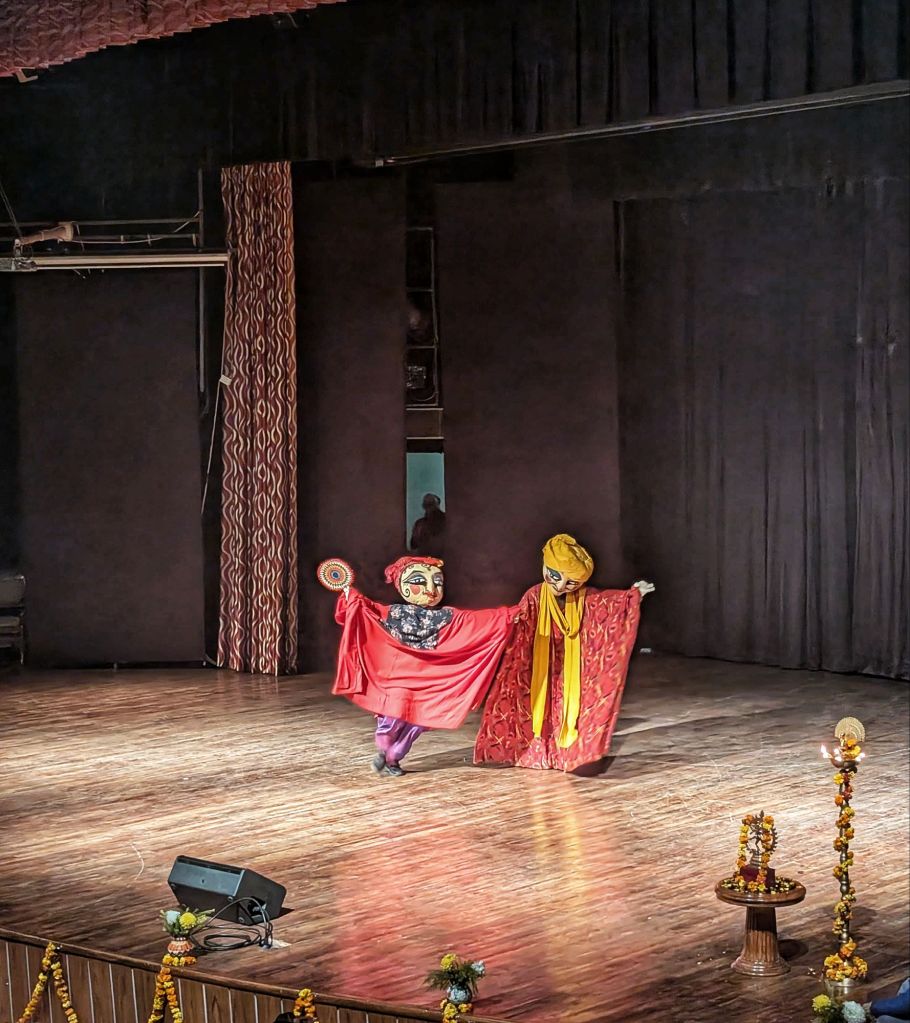
This time, they invited a leading puppeteer, Sangeet Natak Akademi winner and the founder of “The Ishara Puppet Theatre Trust, renowned Dadi Pudumjee. The entire show was divided into two parts. The first one was basically a workshop in which Pudumjee and his team showcased the handling of different puppets such as human puppets, shadow puppetry, Rajasthani puppets (Kathputli) including muppets– whose mouths movements are controlled by hands. Kermit the Frog and Miss Piggy are some of the popular muppets. Marionette theatre refers to the puppets controlled by strings. I remember waiting earnestly for such shows to begin on Doordarshan while in childhood. You can view a part of his workshop here. Though it’s from Amity, ours was more or less similar.
We thought that the show would end there but to our surprise, a beautiful performance awaited us. Pudumjee’s team geared to showcase the folk story of Poshak Raja through human puppets. The characters were human but they wore big face masks (made using the Papier-mâché technique), that made them look much smaller than their actual height.
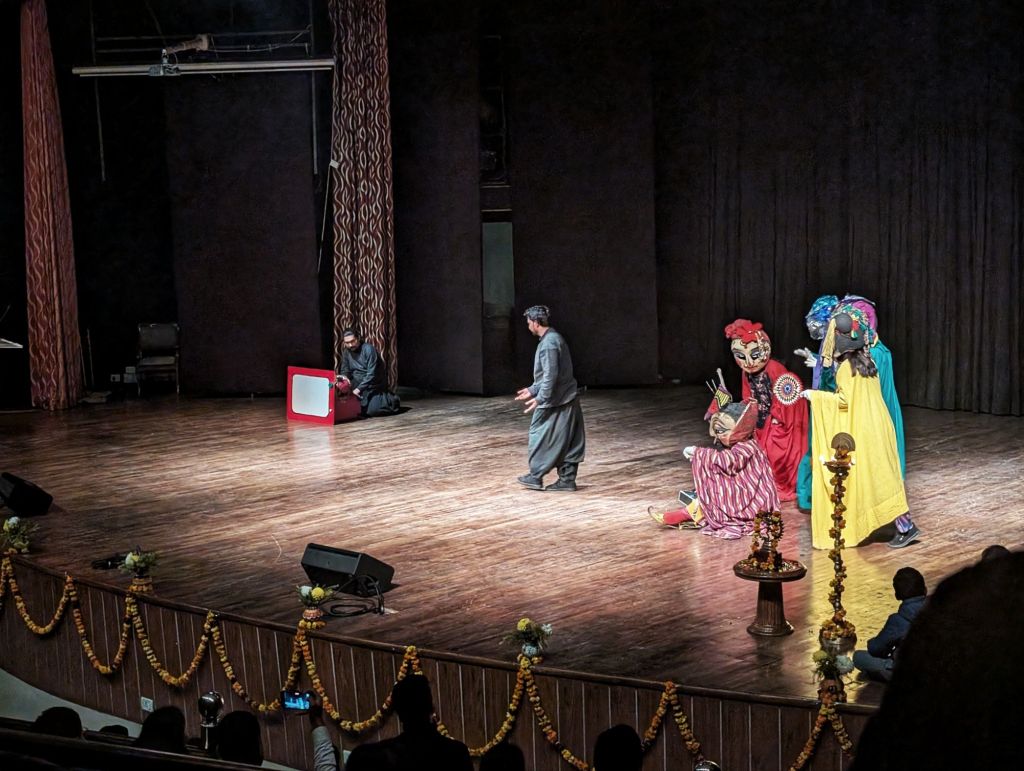
Title: Poshak Raja
Director: Dadi Pudumjee
Venue: MAC Audi, IIT Roorkee
Running time: 45 minutes to 1 hr
Genre: Folk comedy, humour, satire
Masks are crafted using a variety of means. I learnt some of the techniques during my Theatre Appreciation Course at NSD by Arun Kumar Mallik Sir who specialised in Stagecraft, which is an important aspect of theatre. According to him, the material used is the basic and most important component in any stagecraft.
The show Poshak Raja was staged on pre-recorded audio where characters have to time their actions according to the audio. The movements of the characters on the stage were lofty which often invoked humour and laughter. There were occasional interventions of non-masked characters, perhaps to suggest the human performing on the stage. Also, they played a crucial role during scene shifts.
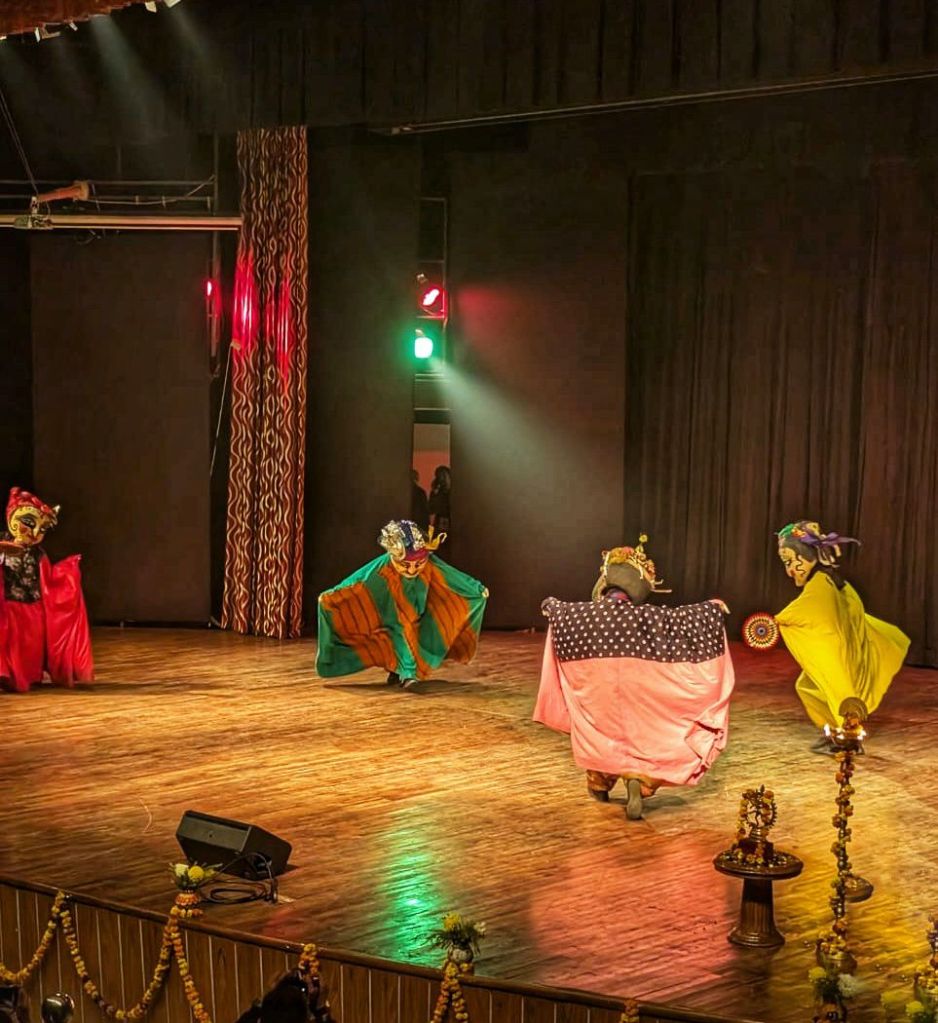
Dance/music is an essential component of every folk play. The same is evident in thus play too. Believe me, seeing human puppets dance is a one-of-a-kind feeling. Shows like these place you somewhere between childhood and adulthood, which have the elements of both. It’s a unique feeling. Coleridge’s Willing Suspension of Disbelief becomes true at such times.
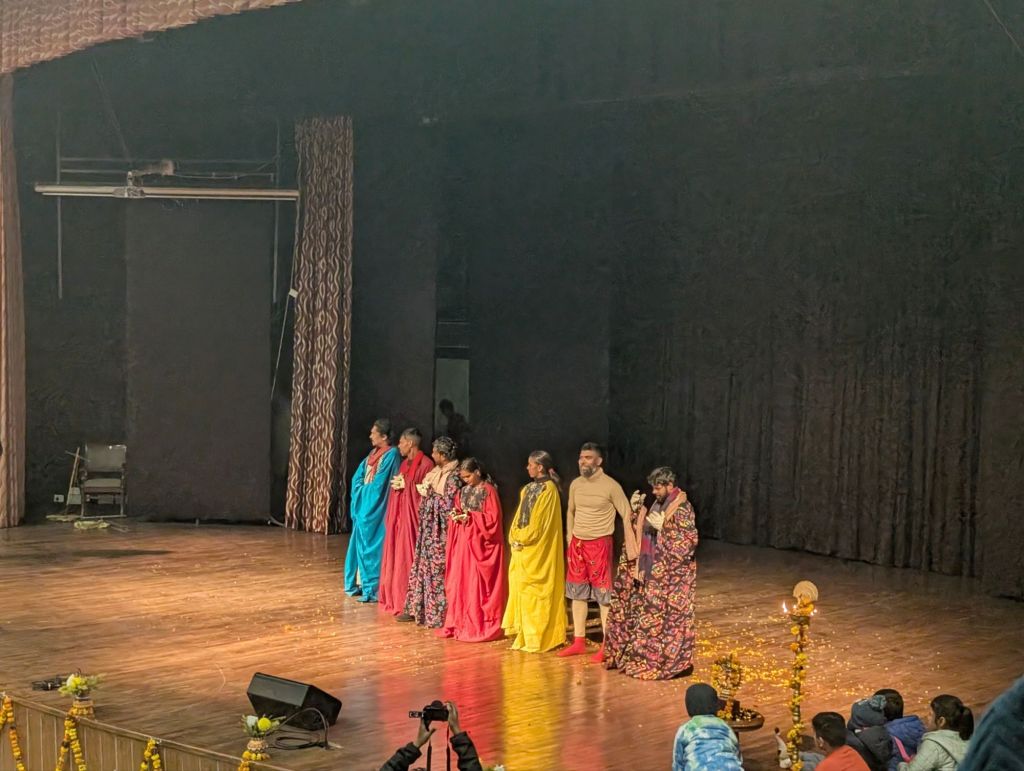
Can you believe, they are the ones behind masks in the precious pictures? The children cheered and the audience was reluctant to leave their seats even after the performance culminated. Whosoever gets the opportunity to watch such performances, grab at first opportunity. Believe me, it’ll be a unique experience.
After the show, I kept wondering, what if the show didn’t have voice-over and the dialogue was actually spoken by the characters? There had been the possibility of improvisation, right?
©Shashank
The content and the photographs are subject to copyright. If used, cite the source properly and the same should be conveyed to the creator.
P.S. I thank my friend and colleague Ila for providing me with the pictures and videos of the show. Click here to view the clips of the performance.
 Pragmatic's Personas