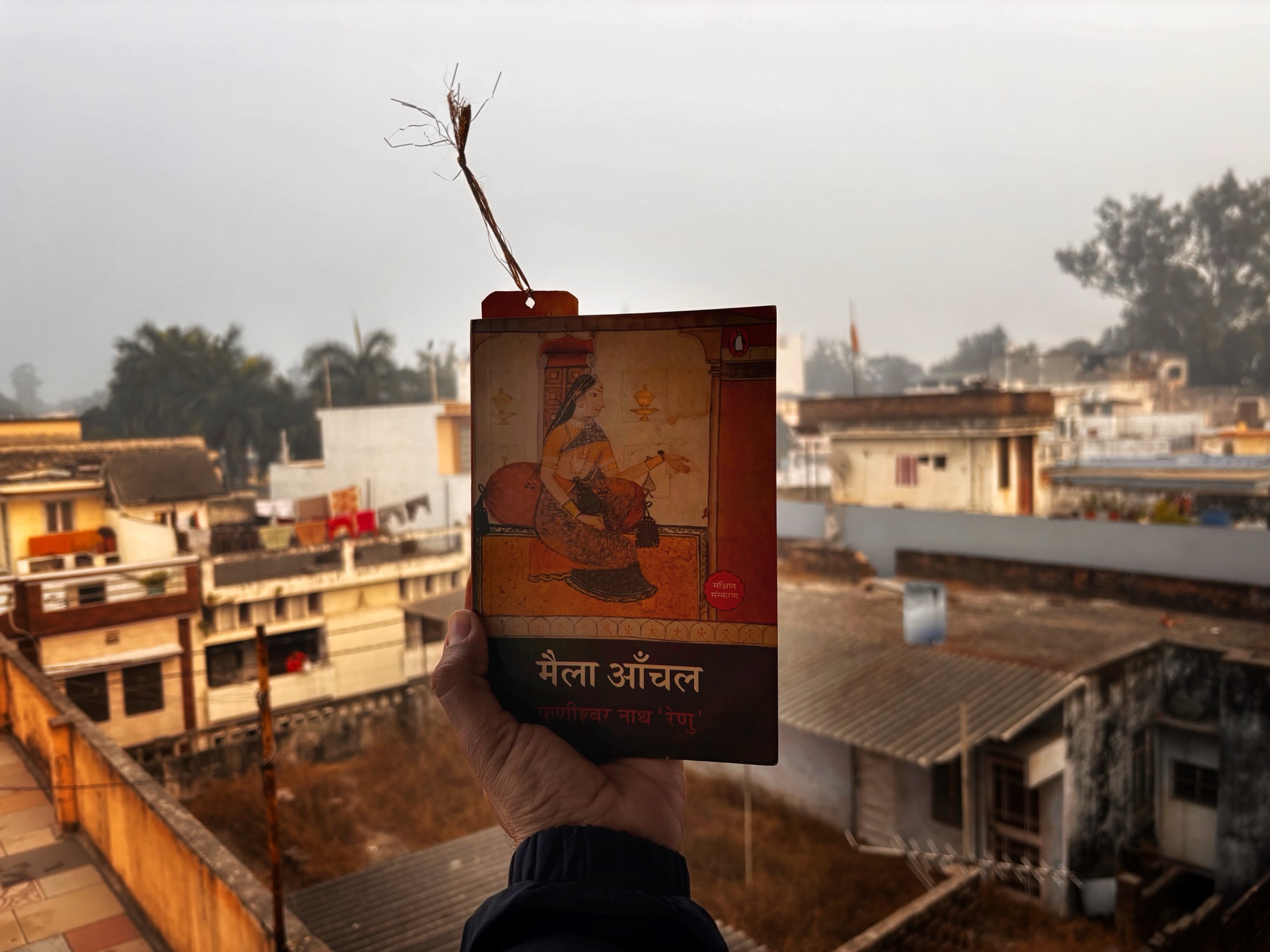

To capture the socio-cultural and linguistic landscapes accurately, one should portray the way they’re spoken. Where the other writers settles on using Hindi for this purpose, Renu goes a level ahead and uses dialects draped in Hindi to capture the expressions of rural India.
How often do you wonder what the situation was like during the time of independence? What were the major concerns of the people? How did they perceive the struggle movement? What were the other battles they were fighting apart from the former? How did they contribute to the movement? And, more importantly, what was their personal life amidst these situations? Renu collects all, but not limited to, these themes in his widely acclaimed novel Maila Aanchal.
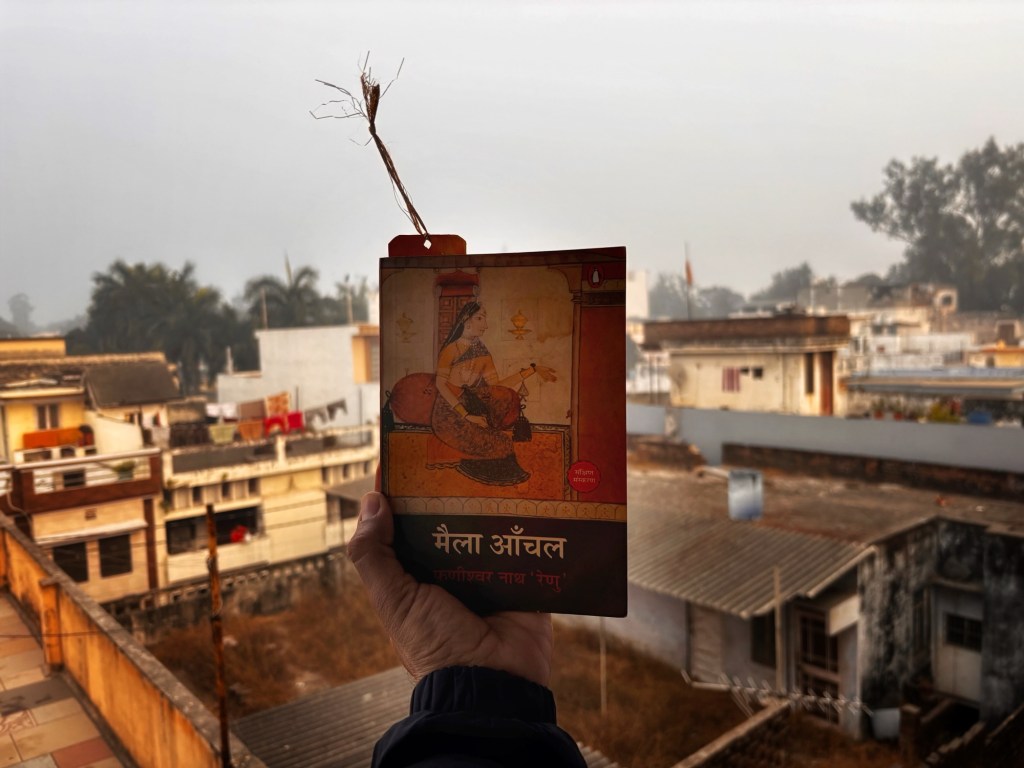
Title: Maila Aanchal
Author: Phanishwar Nath ‘Renu’
Written: 1954, depicts the time around independence
Genre: Novel (Though fiction but paints a realistic picture)
Published: First in 1970 by Hind Pocket Books. Republished in 2024 by Sawdesh Penguin Random House
Price: 140/-
What is the single most remarkable aspect of the novel, Maila Aanchal? My immediate reply would be the usage of language. Like English, we Indians do speak Hindi differently, wrapped in dialects that vary across regions. There are more than 48 dialects of Hindi alone, practised across different parts of India. It is said that Language and culture change in India every 12 miles. While this statement would be an exaggeration at this point, it does change at 100-150 km.
Maila Aanchal, which is set in Purnia and the nearby regions of Bihar, employs numerous regional dialects like Maithili, Bhojpuri, Magahi, Nepali, and even Santhali, as per the characters, reflecting the diverse linguistic landscape of its fictional village, Maryganj, in Bihar. The novel also travels to Patna, time and again. I could relate to many words without using the footnotes, since I belong to Bihar. Additionally, Magahi is my first language. The words भारथ (India), daagdar (doctor), Tikas (ticket), Jindabaag (Zindabad), Inkilas (Inquilab), Menister (Minister) and several others have been regionalised to a great extent.
A snap from the book is listed below to give you an idea about the usage of the regional language.

In fact, the whole book is adorned with such expressions. I have reason to believe that there must be several papers and theses that highlight the usage of language in the novel.
The novel brings the personal, social and political life of the characters to a point to highlight the situation prevalent at that time. One of the repeated concerns is corruption and exploitation of power. One of the characters says, “Paisa wala adharam bhi karega to wah bhi dharam hoga” (Wealthy people’s evils are also considered good), which gives an idea about the governance shrouded in corruption. Politics and casteism form the core of the novel. Several characters in the novel also highlight the Maoists’ urgency prevailing at that time, the prominent being the doctor. They are often called comrades and live in disguise in various positions.
Altogether, Maila Aanchal presents a realistic picture of India during independence, struggling with different issues, and how rural people were trying to come to terms with them. Can you find the contemporary relevance? The novel brings a range of characters and issues, so much so that it requires multiple readings to comprehend in a better way. I suggest everyone go through this book at least once in their lifetime.
Also, let me know how you comprehend the title!
©Shashank

