
If we’re to preserve culture, we must continue to create it.
-Johan Huizinga
‘Chhau’ isn’t unfamiliar to those who take a keen interest in India’s culture, traditions, and performance arts. As a researcher associated with theatre, I have come across Chhau multiple times, through books and research articles. However, I only got the chance to view it when SPIC MACAY, the heritage Club of IIT Roorkee, invited Shri Tarapada Rajak ji to showcase his famous Purulia Chhau, unique to West Bengal. The other two include Seraikella Chhau of Jharkhand and Mayurbhanj of Odisha. The first two types of performances employ a mask, whereas the third is performed without one. Another important aspect of Chhau is that it is largely mime, i.e., there is no dialogue. A story is told through action, expressions, and music.
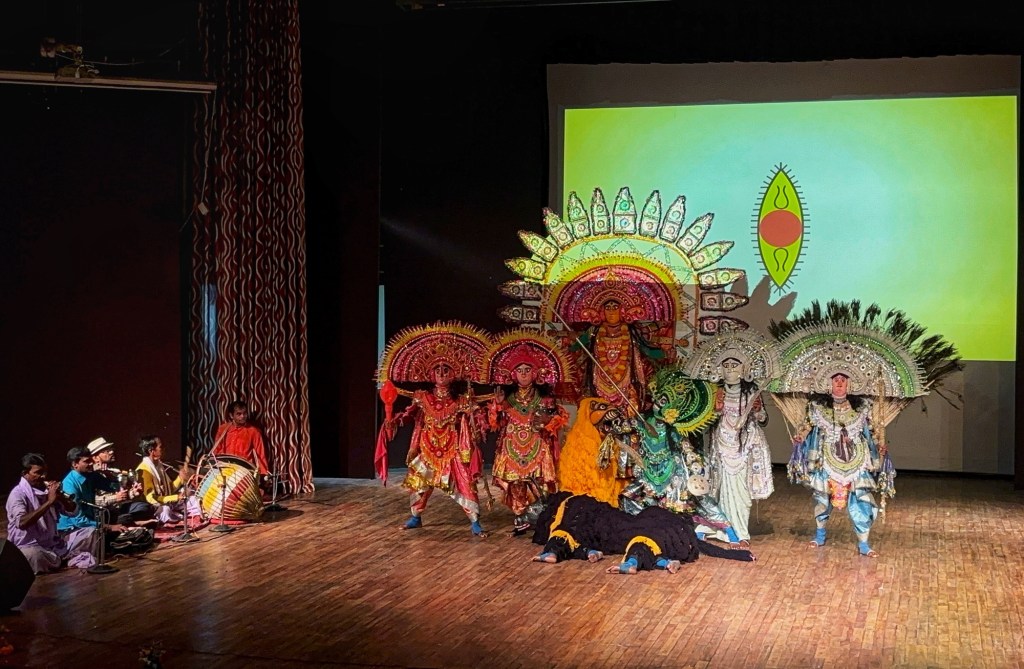
The performers of Chhau mostly weave their themes around mythology. For instance, epics such as the Ramayana and the Mahabharata, stories from the Puranas, and stories rooted in oral traditions. The audience is mostly familiar with these stories; however, the idea of Chhau is to bring to life what they have been imagining.
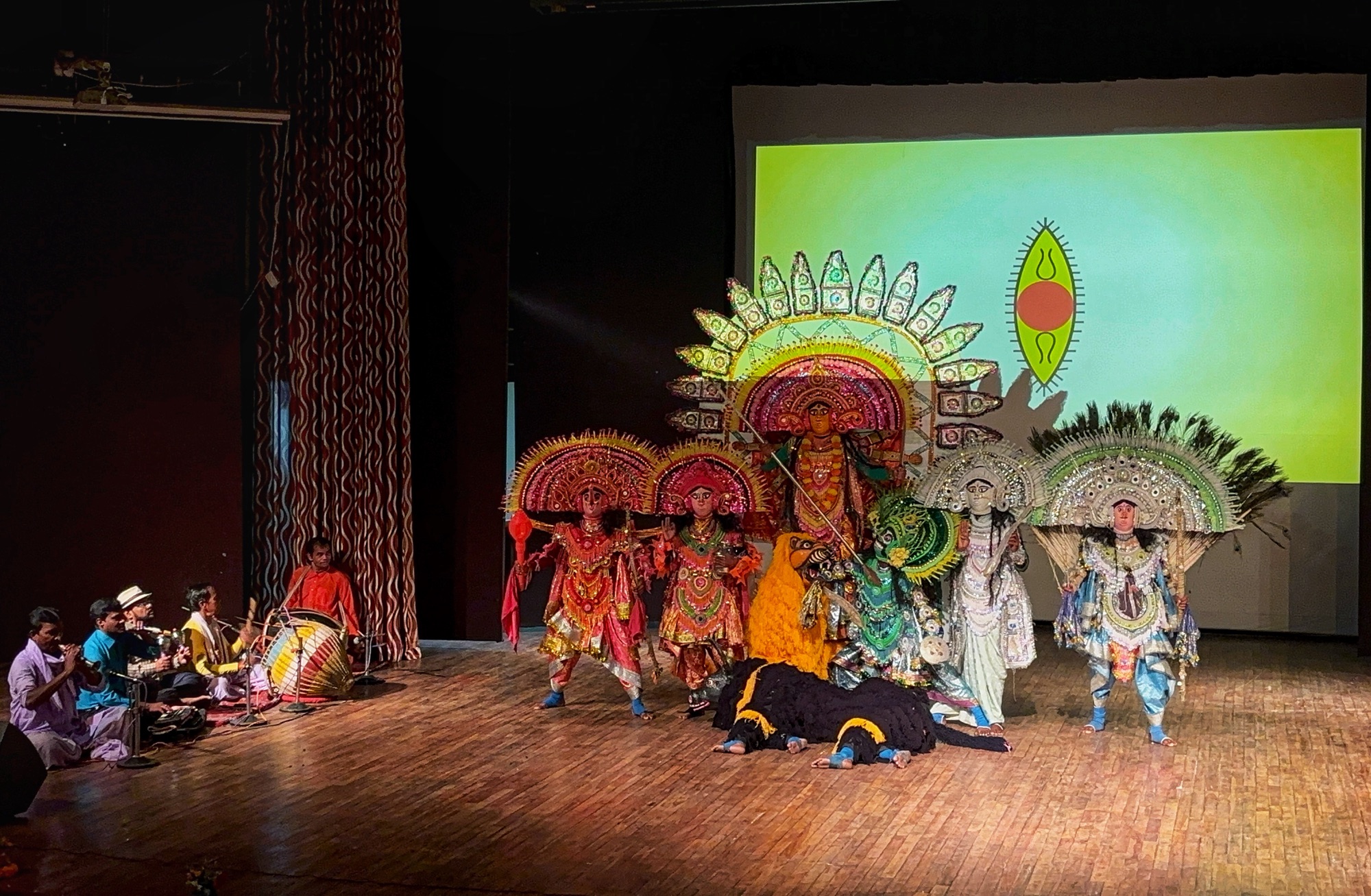
The performance began with the musicians entering the stage and taking their seats in front of their respective instruments. The instruments included Flute, Dhol, Maraca and Dhamsa (second from the curtain). A person is also on vocals, producing sounds of laughter, animals, and other sounds during the performance. I was delighted to see that none was autotuned. The show started with a benediction. The actors entered in their elaborate costumes and masks according to the role they were assigned. For instance, a person played the role of a lion, the vehicle of Goddess Durga, entered in a lion costume, walking on four legs. The vocalist produced the roar of a lion whenever required. The actors displayed extraordinary bodily flexibility and martial arts skills on stage by performing a range of movements. Even through masks, the expression was evident. The central theme of the performance was “Mahishasura Mardini,” meaning the slayer of the buffalo demon Mahishasura, referring to a fierce, 10-armed form of Goddess Durga in Hinduism who rides a lion and wields divine weapons. The theme was relevant since the 10-day Durga Puja festival had concluded a day earlier.
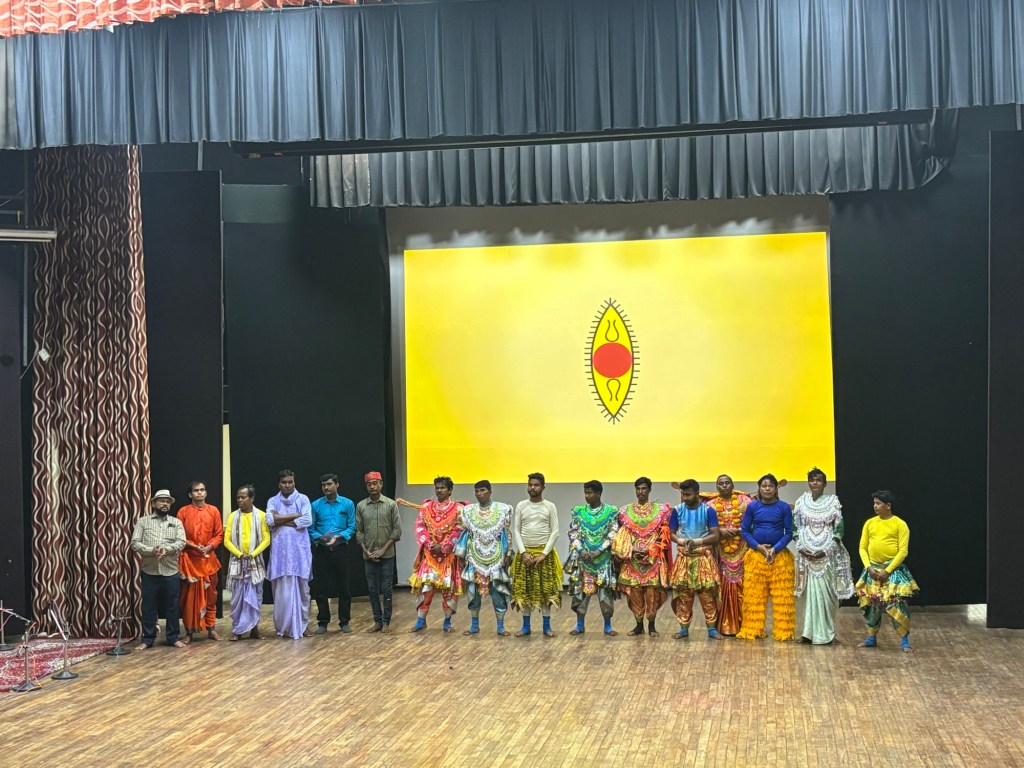
The performance ran for around 45 minutes. Altogether, the performance was vibrant, energetic, engaging and moving. Having watched one form of Chhau, my next target would be to watch the other two.
©Shashank
P.S. Anyone interested in watching a short clip of the performance can click here.

