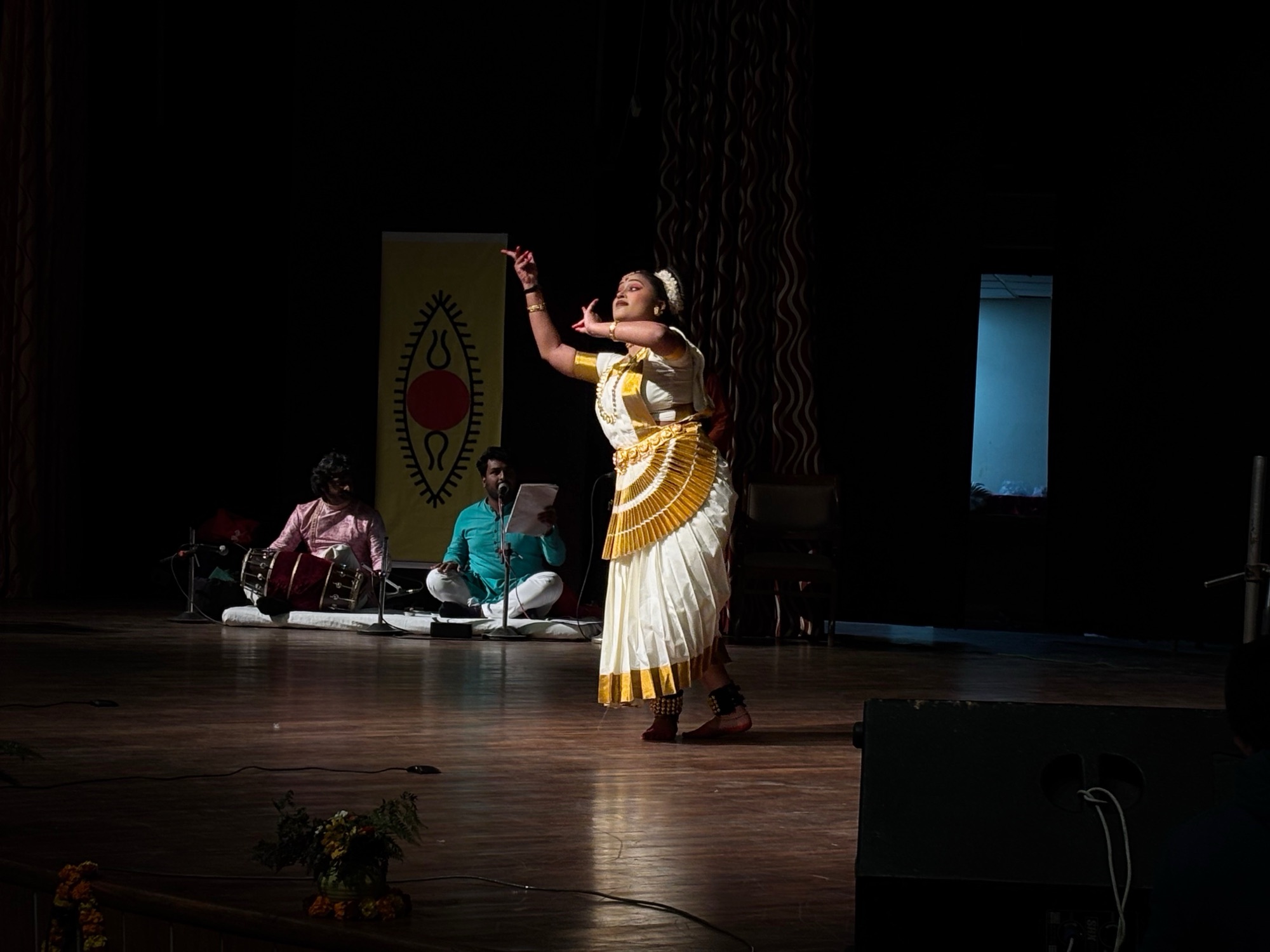

There is a subtle difference among various classical performances but what’s common among them is that their roots emerge from Natyashastra!
The inaugural event of SPIC MACAY, Dr Deepti Bhalla, recipient of the Sahitya Akademi Award, with Revathy, her disciple, accompanied by three artists, one each on Mridangam, vocals and Idakka (an hourglass-shaped drum from Kerala) on the stage and the magic that unfolds! Every attempt by the artists to take the bhavas to the audience to invoke rasas, to define Abhinaya, an act of carrying forward. The dance form, Mohiniyattam, relates to the Mohini avatar of Lord Vishnu, an incarnation to prevent Amrita from falling into the hands of demons.
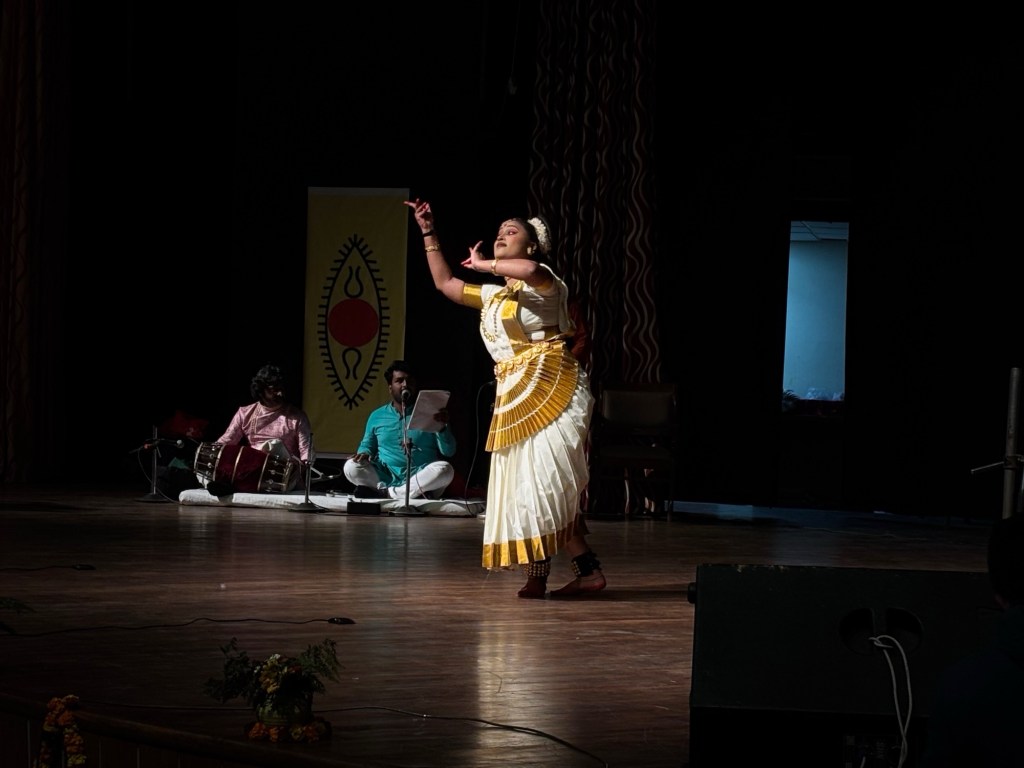
The performance starts with a benediction, a characteristic feature of the Natyashastra, in which the artists seek a blessing from the god for a successful performance. Both Dr Bhalla and Deepti encircle the stage till the apron, starting from the left wing, their bodies bend in gratitude, hands folded, seeking blessings from God (bhudevi), followed by the audience and the co-artists on percussion and vadyas. The vocal was a blend of Sanskrit and Malayalam, known as Manipravalam.
After the benediction, she comes over to the podium to enlighten the audience about the classical dance form, Mohiniyattam of Kerala, since SPIC Macay’s one of the objectives is to impart the knowledge of classical performances to the youth. Mohiniyattam takes its inspiration from nature, be it the body movement or the expressions. Since it’s rooted in the culture and tradition of Kerala, the dance form reflects and imitates the palm tree, beaches, coconut and other diverse natural entities. It’s there, we find a point of difference with the other art forms of Kerala, i.e. Koodiyattam and Kathakali. However, nature is inherent in them too, but Mohiniyattam manifests it in a surreal way. Further, she elucidates the three N’s of classical dance- Nritta, Nritya and Natya, based on the message that they convey. Nritta is pure dance, having no such meaning but rhythm. Nritya possesses expression or a symbolic meaning, whereas Natya relates to expressing a story through action. Natyashastra also suggests that dance and music are an inherent part of drama. It’s the union of the three that results in rasanispattih in the audience.
The rasa sutra, as suggested by Natyashastra, suggests “Vibhava-anubhava-vyabhichari-samyogad rasa nishpattih,” meaning the realisation of rasa comes from determinants (vibhava), consequents (anubhava), and transitory states or fleeting emotions (vyabhichari-bhava).
She further reflects on her journey and her rigorous practice of 12 years, dedicated to this dance form and her guru, who shaped her. She concluded her speech by saying, “No matter how high we fly, our foot shall be on the ground.” I guess Mohiniyattam teaches us this. To be humble and grounded in nature.
After this crucial information, Dr Bhalla and her disciple went on enacting each of Nritta, Nritya and Natya through their performances. Though it’s not possible to enact one and leave the other two, the idea was to show the dominant trait in them. It’s a perfect balance in them that leads to abhinaya and invocation of rasa.
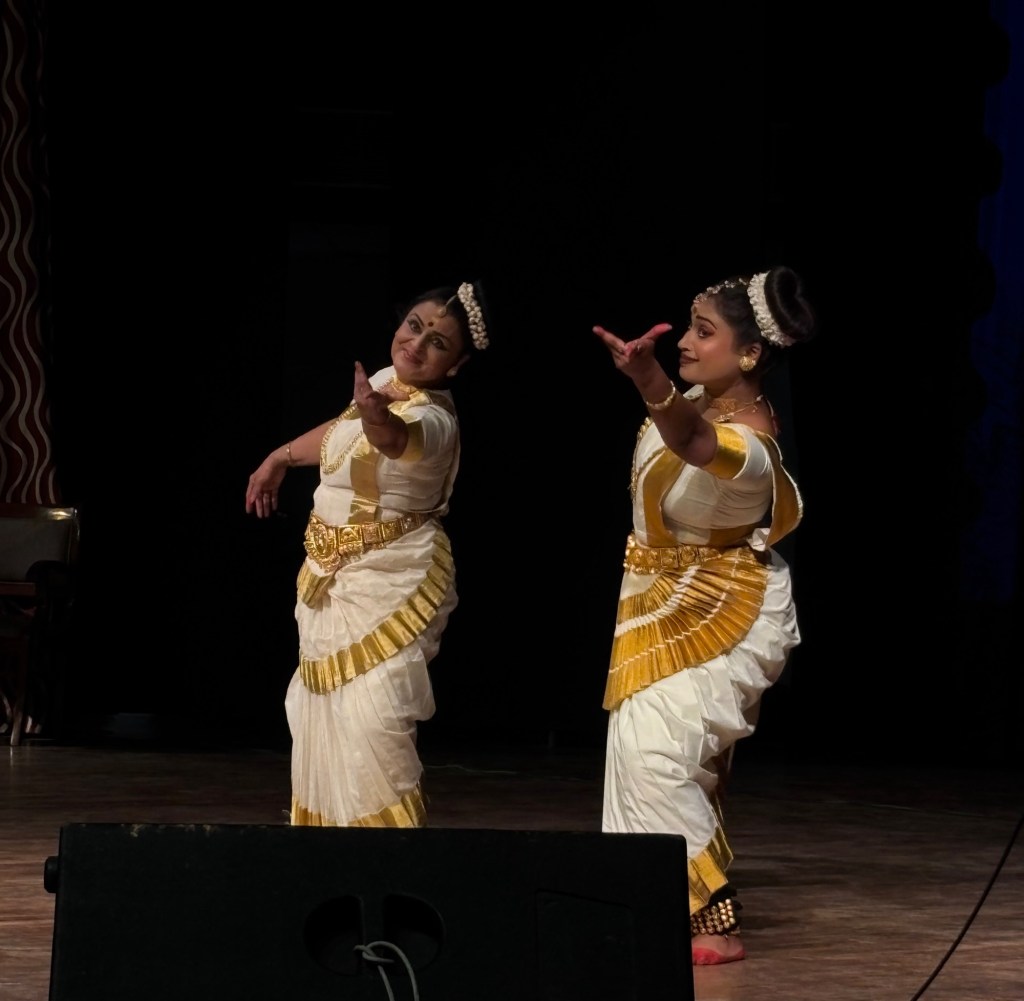
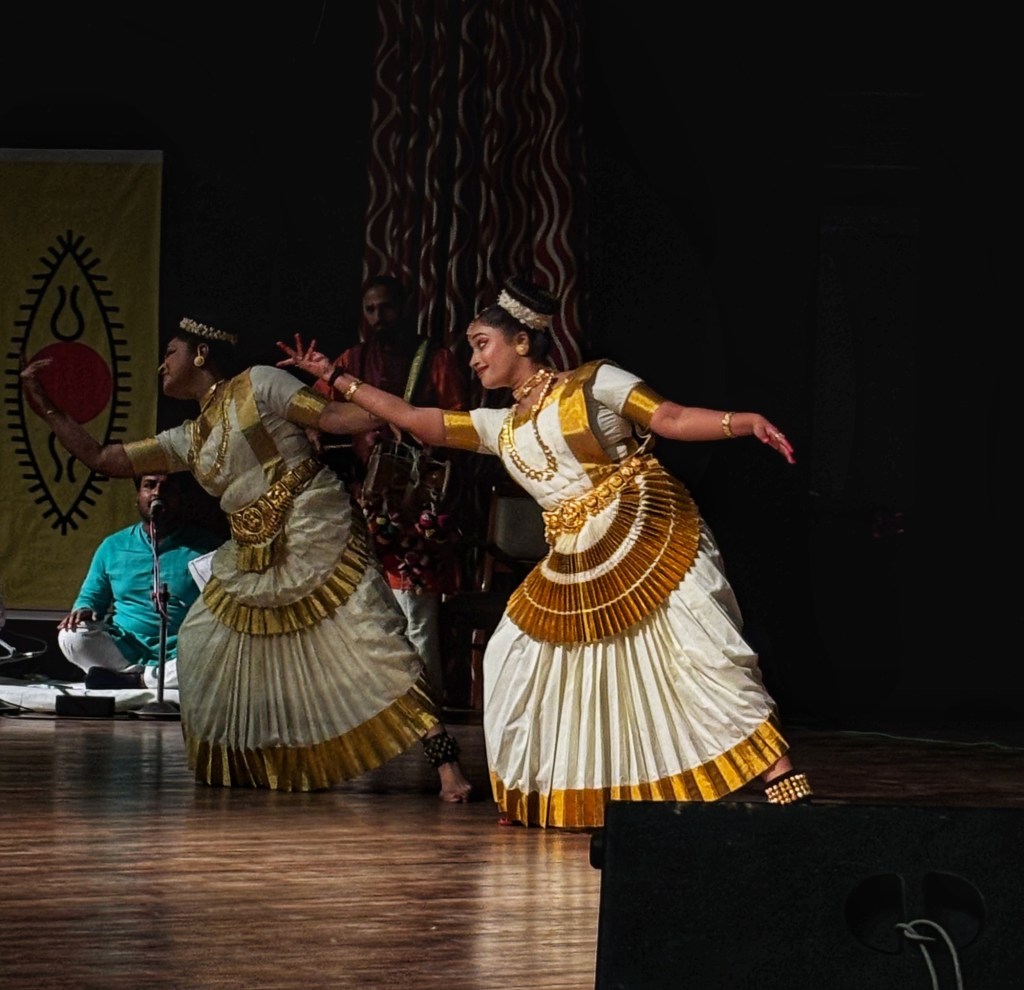
The above pictures illustrate a moment during the natya performance based on the song ‘Jai Jagdish Nandkishor’. Truly mesmerising. Usually, it’s meant to be performed solo, which they did during their performances, while coming together on this one. The entire show enticed the audience. It was truly a delight to see the various elements of Natyashastra come to life before my eyes. Like other classical performances, Mohiniyattam blends Angika (body language, gestures), Vachika (speech, song), Aharya (costumes, makeup, props), and Sattvika (internal emotional states, psychosomatic expressions) blissfully. The performance concludes the same way as it started– bowing with folded hands.
As I left the hall after the performance, I found myself dipping in Adbhutha rasa!
©Shashank
Disclaimer: All content and images on this blog are protected by copyright and are the intellectual property of the blog owner, unless otherwise stated. Unauthorised use, reproduction, or distribution of any text, images, or other materials without permission is strictly prohibited. If you wish to share or reference any part of this blog, provide proper credit and include a link back to the original source.

